
All Black vs Blue Panels: Aesthetics, Heat, and Output
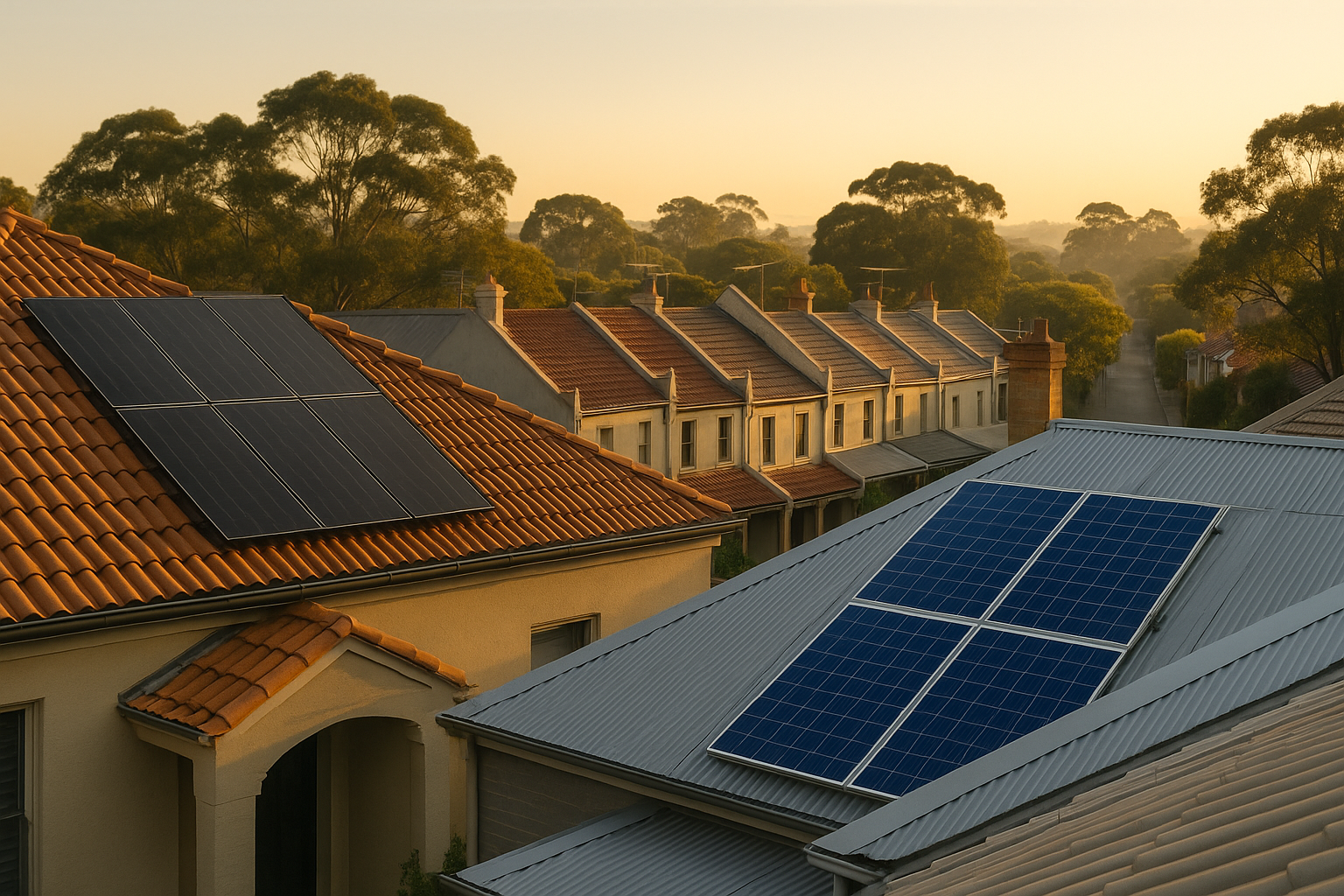
Buying a solar system involves more than comparing price tags. Homeowners often weigh up aesthetics against performance and may wonder whether black solar panels vs blue is simply a matter of style or if those darker modules run hotter and affect output. In Sydney’s warm summers and mild winters, colour is one piece of the puzzle. This article offers a friendly, expert comparison to help you decide and points you towards our services should you want to explore personalised options.
How colour ties to cell type
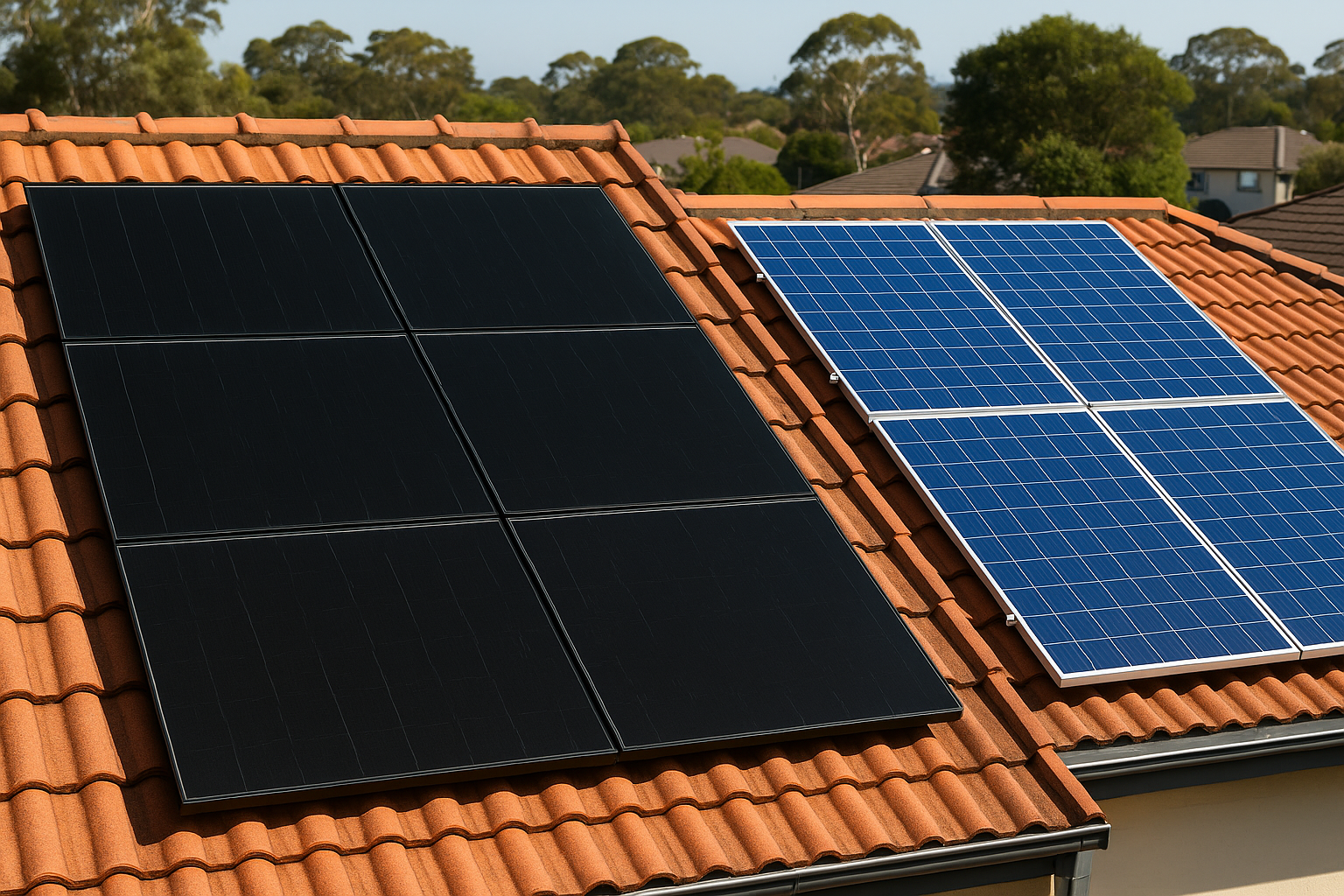
The colour of a PV module tells you something about how it is made. Many “blue” modules are polycrystalline. Manufacturers melt together small fragments of silicon; as the crystals solidify they reflect light differently, giving a shimmering blue hue with a visible crystal pattern. These panels use less‑pure silicon and are therefore cheaper to produce. Their efficiency often sits a few percentage points below monocrystalline products, but they offer good value when roof space is plentiful.
“All black solar panels” are typically monocrystalline. They are cut from a single silicon ingot and absorb more of the visible spectrum, so the cells appear dark or even jet black. To achieve a uniform look, many brands use dark encapsulants and black backsheets and pair them with black frames and concealed busbars. This gives a sleek, seamless roofscape that blends with dark tiles or Colorbond roofs. On the street it’s hard to see individual cells; the array reads as a single, neat rectangle.
Colour isn’t the only design element you see from the kerb. Frames, racking, cabling and junction boxes also affect the final view. A slim black frame can disappear against a dark ridge tile, while a silver frame stands out on darker roofs. Junction boxes placed towards the peak, tidy conduit runs and well‑chosen racking angles help even blue modules look intentional. Because Sydney houses often have terracotta or dark metal roofs pitched around 22–30°, visual uniformity is most noticeable on street‑facing aspects. If you care about kerb appeal and have a heritage or strata‑regulated facade, a black array may be worth the investment. If function is your priority or the panels are hidden on a north‑facing rear roof, polycrystalline’s mottled blue can be perfectly acceptable.
If you’d like to discuss which style suits your roofline, our design team can help. Feel free to browse our services and get in touch.
Temperature coefficient reality
Every solar panel has a temperature coefficient, usually expressed as a percentage per degree Celsius. It describes how much power output changes for every degree above the 25 °C standard test condition. For example, a coefficient of –0.39 %/°C means the module will lose 0.39 % of its rated output for every degree the cell temperature rises above 25 °C. A higher (less negative) coefficient is better because less output is lost when the panel gets hot.
Darker modules can absorb slightly more heat than lighter modules when air is still, but the difference in real use is small. The mounting height, roof colour, wind speed and airflow beneath the array have a far bigger impact on the cell temperature. A well‑designed system with a gap between the module and roof and proper ventilation will keep any panel cooler, whether its backsheet is black or white. Modern monocrystalline panels often have temperature coefficients comparable to or better than polycrystalline modules, so when comparing “black vs blue” products, look at each model’s datasheet rather than assuming colour alone determines performance. Solar panels on Sydney roofs commonly operate 20–35 °C above ambient on a sunny day, and high‑quality brands specify coefficients in the –0.3 to –0.5 %/°C range.
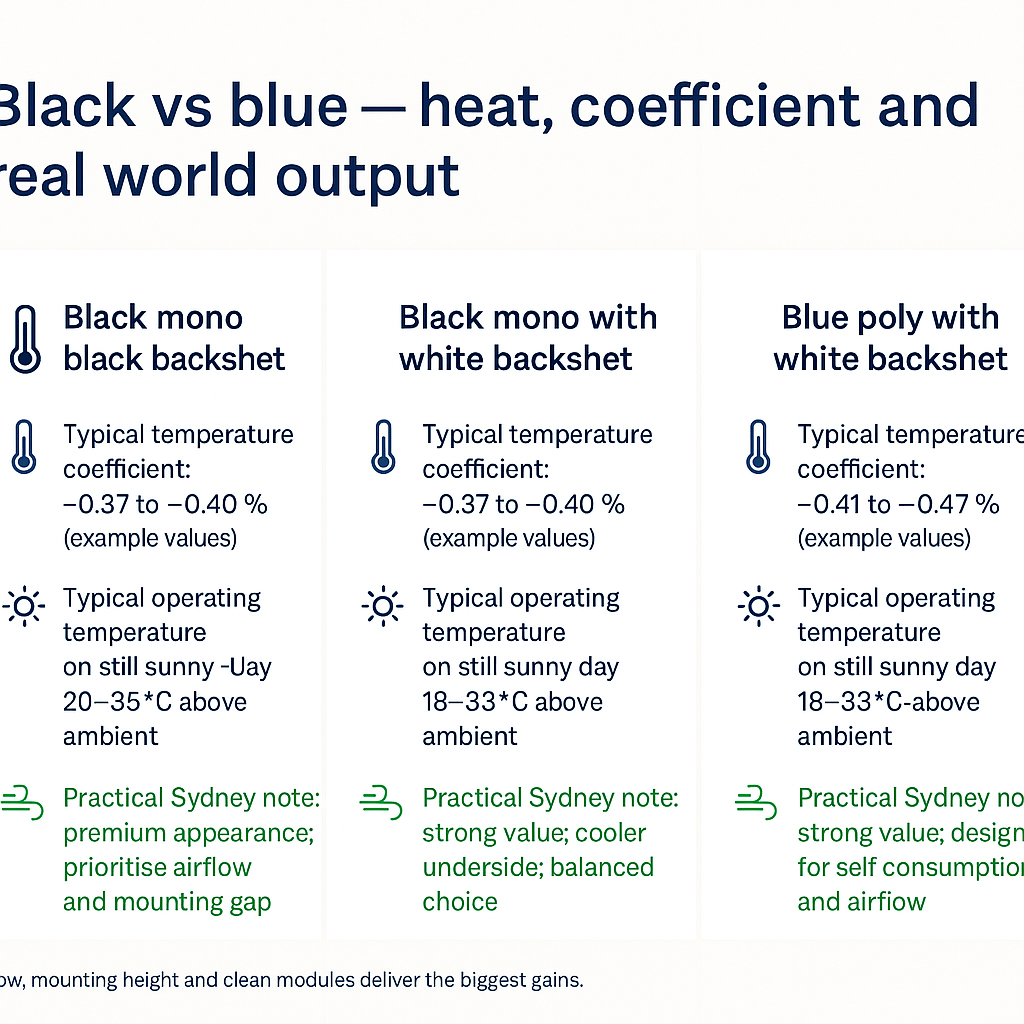
Here is an example of typical values you might see:
Configuration
Typical temperature coefficient (%/°C)
Typical operating temperature vs ambient (still sunny day)
Practical note for Sydney roofs
Black mono with black backsheet
–0.39 to –0.42
20–35 °C above ambient
Premium look but backsheet absorbs heat; ensure good airflow
Black mono with white backsheet
–0.37 to –0.40
18–33 °C above ambient
Combines dark cells with cooler underside; common on high‑end modules
Blue poly with white backsheet
–0.41 to –0.47
18–33 °C above ambient
Lower efficiency but more affordable; cooling similar to white‑backed mono
In practice, the biggest gains come from proper spacing, sturdy racking, keeping the modules clean and avoiding shade. Choosing products from lists such as the Clean Energy Council’s approved solar products ensures they meet Australian standards. Government resources like energy.gov.au’s solar panels guidance explain how climate zone, tilt and orientation affect generation. You can also explore practical usage tips from networks like Ausgrid’s solar and batteries section to maximise your investment.
When to pay more for the look
A premium for all‑black modules is often worthwhile when your array is highly visible. Street‑facing roofs, heritage facades, strata complexes and architect‑designed homes benefit from panels that blend seamlessly with the roofline. If you have large windows or balconies overlooking the roof, a dark, uniform array becomes part of the living view. In prestige suburbs where kerb appeal impacts resale value, paying a little more for sleek modules makes sense.
There are also practical reasons to choose black monocrystalline modules beyond aesthetics. Their higher efficiency can be valuable if you have limited roof space and want to maximise output or future‑proof the system for battery integration. Many top‑tier black modules come with longer product and performance warranties, reflecting their premium build quality. Always compare specifications such as degradation rates, mechanical load ratings and local support; these often impact lifetime value more than colour alone.
Standard blue polycrystalline panels are perfectly adequate in many situations. On rear roofs, tall buildings or industrial sheds where panels are not visible from the street, saving money on the modules can free budget for a larger array, a better inverter or a small battery. On rural properties with plenty of roof or ground space, efficiency differences matter less than total array size. Likewise, if your budget is tight or you intend to upgrade in a few years, choosing reliable blue modules from an approved list can deliver excellent returns without the premium finish.
Regardless of colour, focus on warranty terms, degradation rates and after‑sales support from local installers. A 25‑ or 30‑year performance warranty and a reputable installer accredited by the Clean Energy Council or Solar Accreditation Australia provide peace of mind. It’s wise to compare a black option and a blue option side by side on your quote to see how aesthetics, output and price balance for your home. Our friendly team is happy to prepare both and discuss them with you. Reach out through our services page or Contact Bright Future Energy to start a conversation.