
Shade-Smart Solar: Optimisers vs Microinverters vs String Inverters
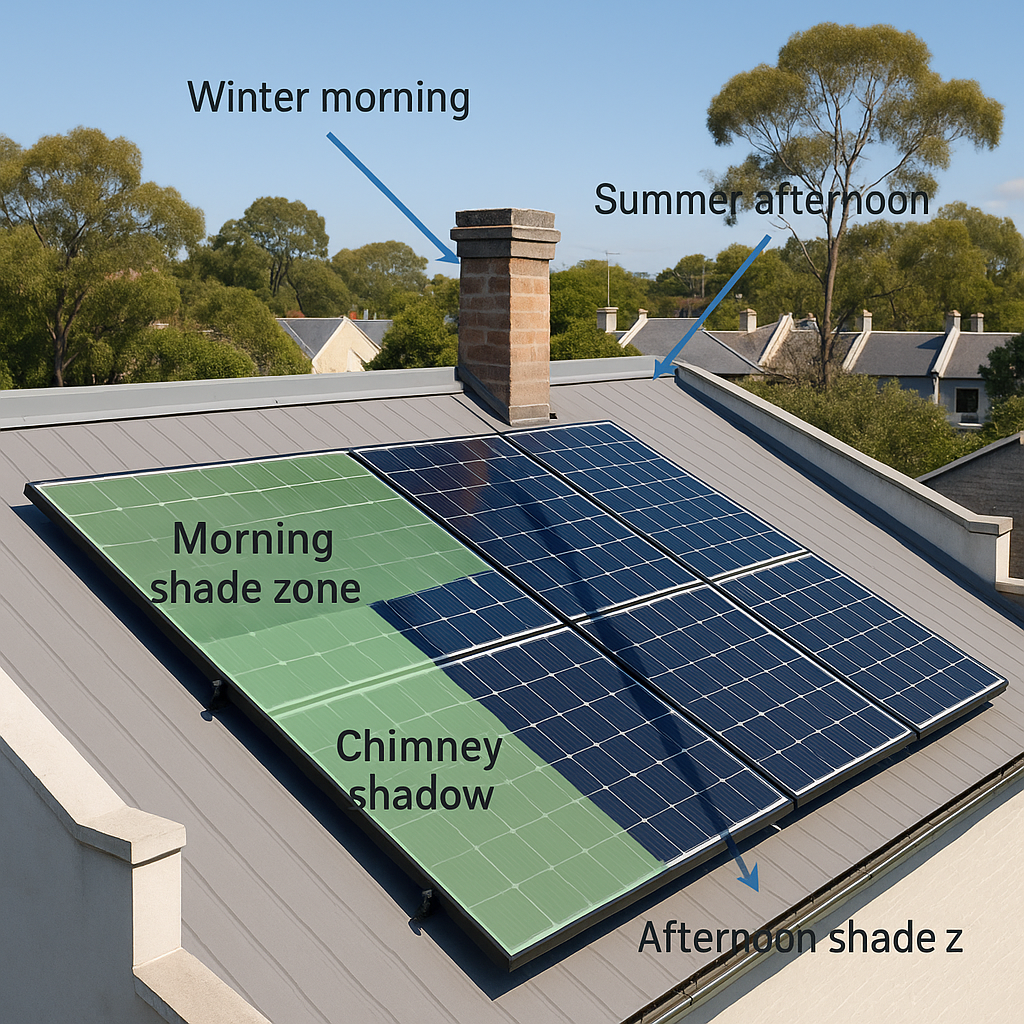
Sydney’s roofs are diverse, and many have chimneys, parapets or trees that cast partial shade. If you’re looking for solar for shaded roofs Sydney, you need realistic answers. This guide compares optimisers vs microinverters and traditional string inverters in plain English, so you can pick the right solution.
How shade actually reduces output
Solar panels are wired together in series strings. That means the current flowing through the entire string is limited by the weakest panel. If one module is shaded, the output of the whole string drops. This bottleneck effect is like a kink in a hose – reduce flow in one spot and everything slows down.
Mismatch losses occur when panels in the same string receive different amounts of light. If your neighbour’s television antenna casts a morning shadow over one edge, the affected panel drags the rest down. When the sun moves, the shade moves too, creating changing losses through the day.
Morning shade can be very different from afternoon shade. In Sydney, low winter sun comes from the north and casts longer shadows across terraces. Summer sun is high and moves quickly, so shading comes from nearby chimneys and parapets. Understanding these patterns is the first step to choosing a solution. For a quick refresher on how rooftop PV works, start with Energy.gov.au rooftop solar basics.
When string is fine — and when it is not
A single MPPT string inverter suits simple roofs with brief edge shade or one clean face. If your terrace only sees an hour or two of shade along one edge in the morning, a cost‑effective string system can be all you need.
|
Roof scenario |
Shade pattern |
Good option |
Why it works |
Watch-outs |
Next step |
|
Single face, brief morning shade |
1–2 hours edge shade |
String inverter |
Simple and cost‑effective |
Watch string sizing |
Confirm with site photos |
|
Split roof, chimney and skylight |
Midday moving blocks |
Optimisers |
Limits mismatch losses per module |
More roof hardware |
Quote with optimiser count |
|
Tall trees to west |
Long afternoon shade |
Microinverters |
Per‑module MPPT and monitoring |
Higher upfront cost |
Check service access and warranty |
Examples only. Your roof, shade map and goals determine the final design.
However, many inner‑city terraces are far from simple. Moving shade from skylights, chimneys and rooftop additions can create unpredictable losses. If your array spans two faces with different orientations or you have a chimney throwing midday blocks, module‑level power electronics are recommended. Trees to the west can cast long afternoon shadows that move slowly, which is when microinverters shine.
String systems have only one maximum power point tracker, so they cannot manage mismatched modules. Optimisers and microinverters give each panel its own tracker. When in doubt, talk to a local designer and follow Ausgrid rooftop safety guidance before climbing onto your roof.
Optimisers vs microinverters: real‑world trade‑offs
Both optimisers and microinverters improve performance on shaded roofs, but they differ in how they work. Optimisers sit behind each panel, tuning the voltage and current to minimise mismatch before sending DC down to a central inverter. Microinverters convert DC to AC right under each module, eliminating the central inverter and its single point of failure.
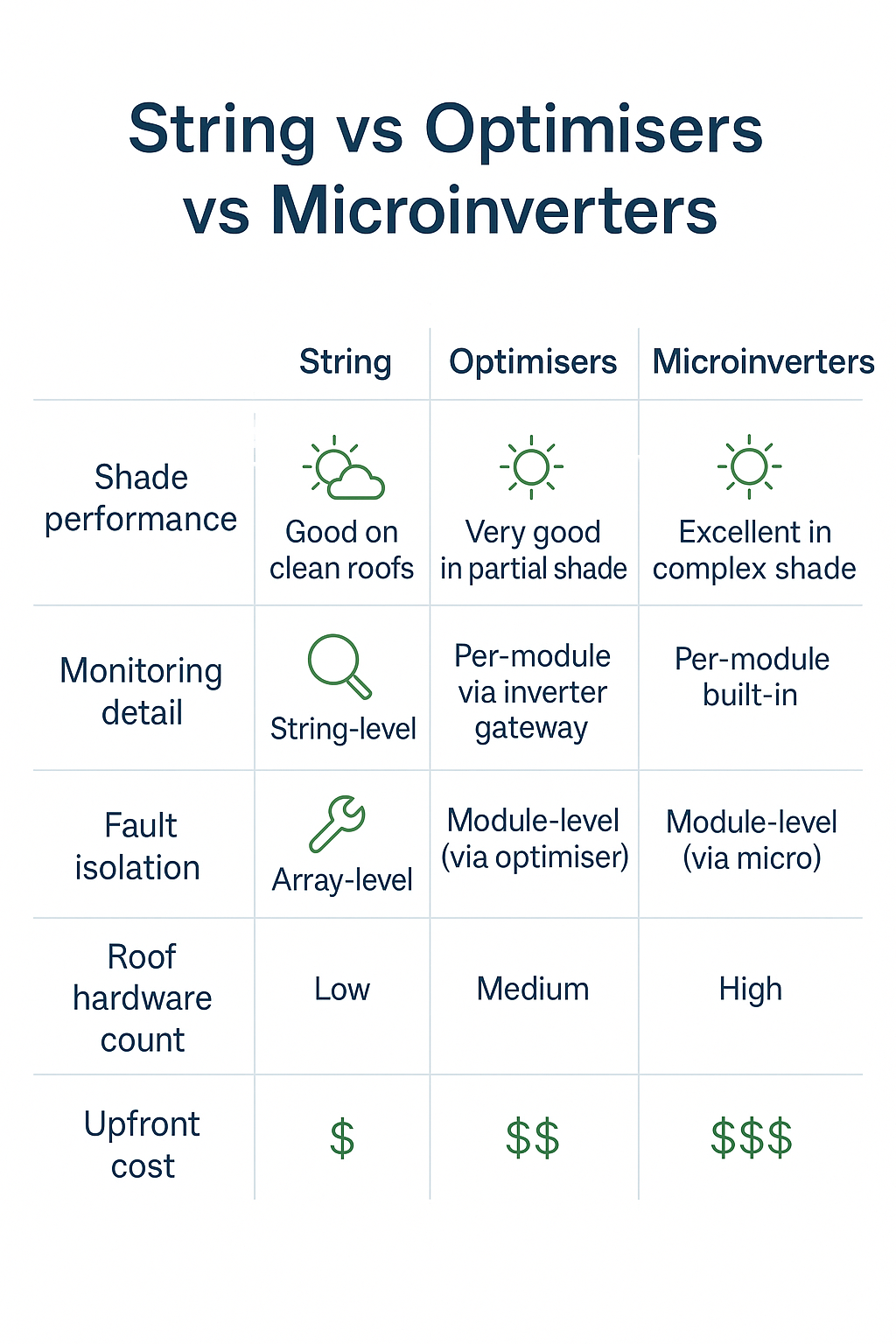
In partial shade, microinverters tend to yield slightly more energy because each module can run independently. If one panel on a Randwick terrace is shaded by a chimney, the others keep producing at full power. Optimisers also manage each panel separately but still rely on the central inverter to convert DC to AC, so the system still has a single piece of hardware that may need replacing in ten or fifteen years.
Monitoring matters too. Both architectures provide per‑module monitoring, letting you see when a particular panel is underperforming. A terrace owner in Redfern spotted a slow drop in output from a western module using the optimiser app and trimmed a tree before losses grew. Microinverters usually come with integrated monitoring, whereas optimiser systems rely on the central inverter’s gateway. Either way, you can set alerts and get support through Services to handle warranty claims or upgrades.
Hardware count and servicing differ. Optimisers add one small unit to each panel but still require a single inverter on the wall. Microinverters replace that inverter with multiple smaller ones. If an optimiser fails, the central inverter keeps running but you might not notice until you check the monitoring. If a microinverter fails, only that module goes offline. Warranties vary by brand, so check the Clean Energy Council product compliance list to ensure your chosen hardware meets Australian standards.
Design tips for terraces and trees
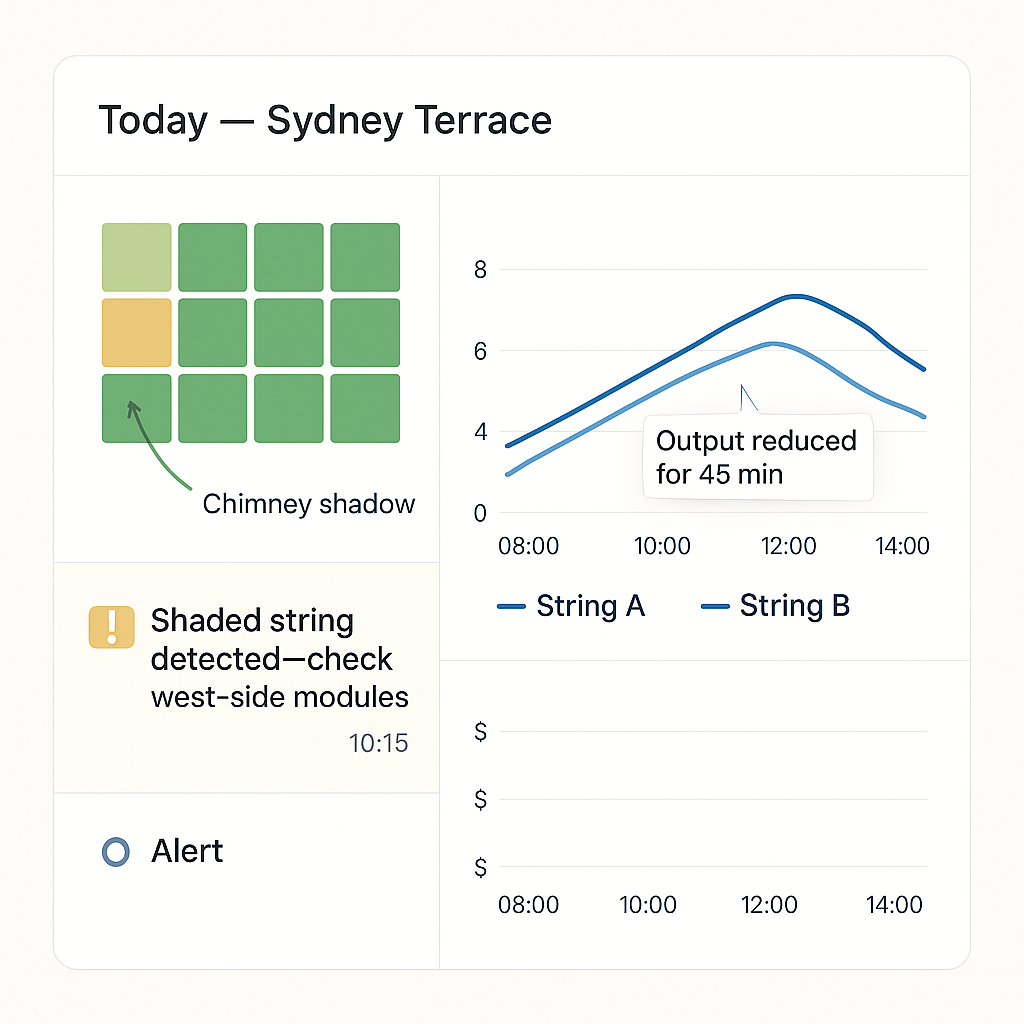
Smart design minimises shade and ensures your system stays safe and accessible. Split strings across different roof faces to reduce mismatch, and keep panels clear of chimneys, parapets and antennas. Leave a walkway between array zones so installers and service technicians can reach panels without stepping on glass.
Consider using a current transformer (CT) clamp and per‑module monitoring alerts. These will flag new shade problems early, such as trees growing into your western array or a neighbour’s renovation throwing shadows. If you notice output dropping in one section, a quick trim or panel move can restore production.
Where trees are a permanent feature, microinverters or optimisers are usually the best choice. They allow panels in full sun to perform independently of those in shade. As your goals change – adding a battery or expanding your array – microinverters make it easy to bolt on extra panels. For design advice and warranty support, explore our Services.
Every roof is unique. An on‑site shade assessment and tailored proposal are the best way to get a reliable solar system that suits your budget. If you want an on‑site shade assessment, reach out via Contact Us. For consumer data and market insights on distributed energy, see AEMO consumer energy resources insights.