
After the Storm: A Homeowner’s Solar Inspection Checklist
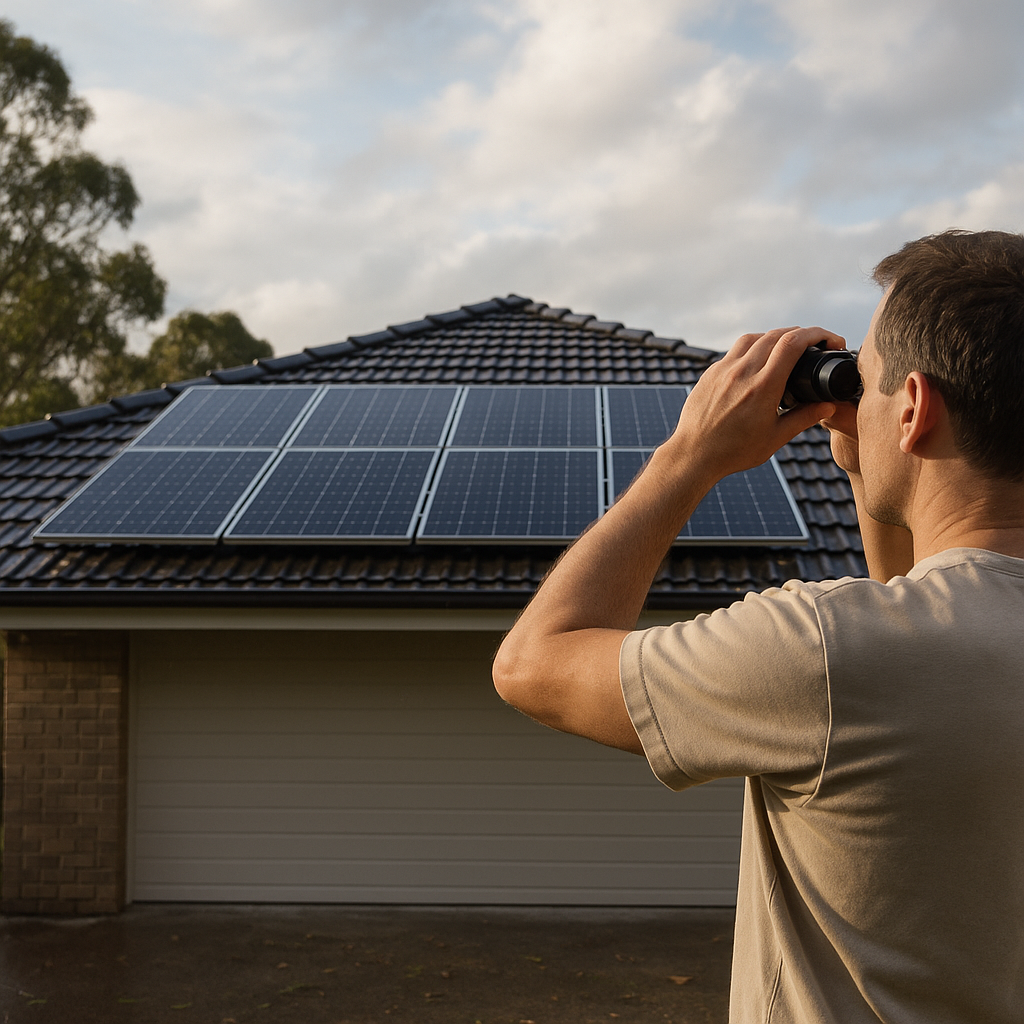
When the skies clear and the rain stops, it’s natural to want to check that your solar panels made it through the storm. Before doing any hands‑on work, a measured solar inspection after storm should start from the ground. Wet roofs and electrical systems make safety the top priority, so this guide explains how to look for signs of damage without putting yourself at risk.
High winds and heavy rain can cause hidden damage that’s not obvious from the ground. A careful post storm solar checklist confirms that everything is secure without putting your family in danger. Solar safety after storms isn’t about climbing up straight away; it’s about observing, documenting and seeking help when needed.
Safety first
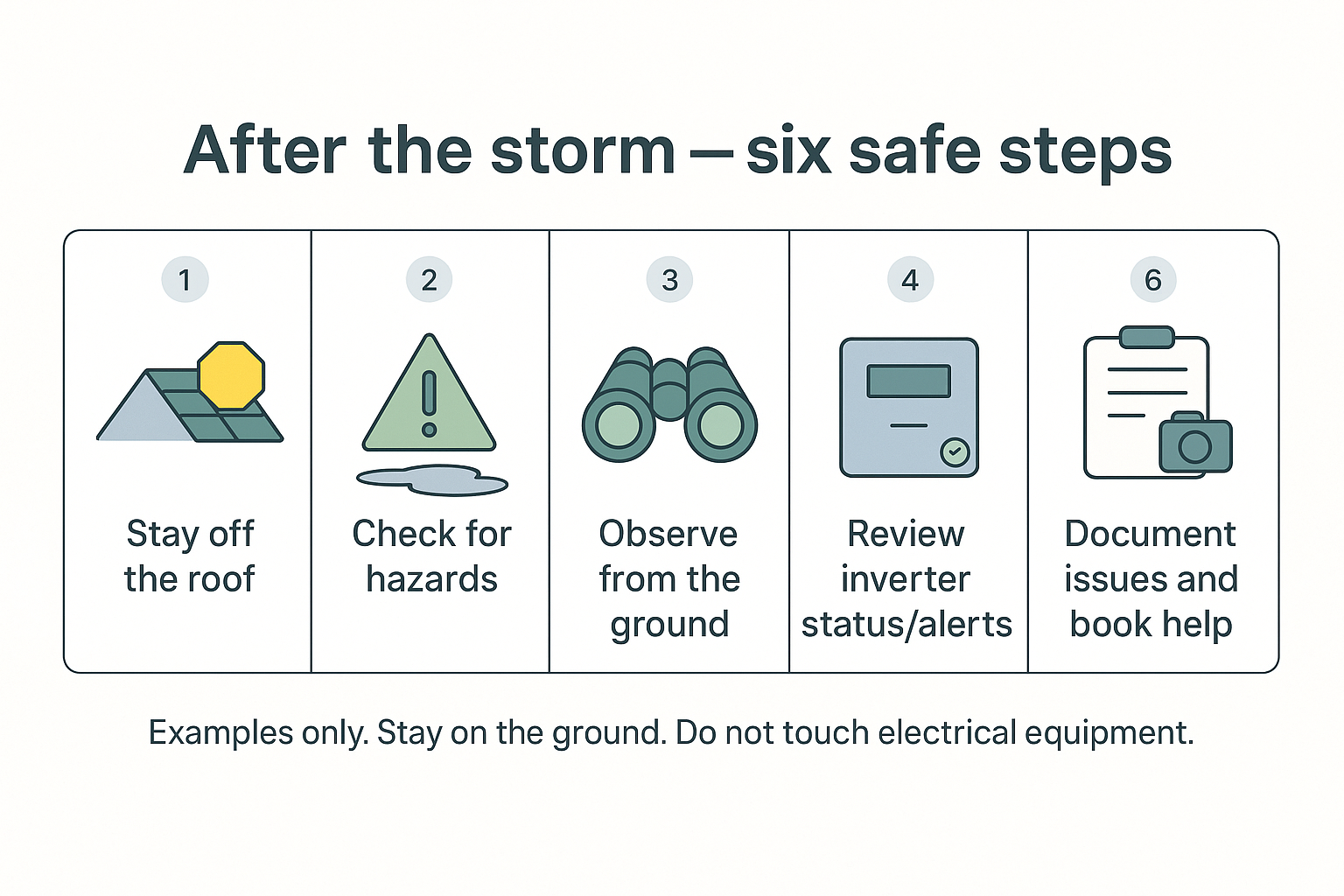
Always stay off the roof and inspect from ground level. Use binoculars if you have them to get a better view of the array. Storms can leave fallen powerlines, pooling water, damaged isolators or sharp debris around your property. Keep clear of any hazards and don’t touch anything electrical. If your installer provided a shutdown procedure for emergencies, only use it when instructed and never when standing in water.
When roofs are wet they become extremely slippery, and ladders can conduct electricity. Wait until surfaces are dry before cleaning and treat all cables as live until a professional has verified otherwise.
Before you investigate, it’s worth reviewing the Ausgrid storm safety information which reminds homeowners to stay at least eight metres away from fallen power lines and to call their network operator. If anything looks unsafe, stop immediately and use our Contact Us page for quick support.
What to check visually
After confirming there are no immediate hazards, take a slow walk around your home and look at the roof from all sides. From ground level you can spot obvious signs of damage without climbing a ladder. Loose or cracked tiles and shifted Colorbond sheets near mounting points indicate movement that needs professional attention.
The racking system that secures your modules should look straight and solid. If a module looks crooked or lifted, the clamps may have moved; take photos from the ground for technicians.
Fast checks after a storm (ground level)
|
What you see |
What it could mean |
What to do next |
|
Loose or lifted module |
Rail or clamp movement |
Stop. Photograph from ground. Use Contact Us. |
|
Debris piled at array edge |
Blocked drainage, moisture risk |
Schedule a clean via Services. |
|
Damaged conduit or exposed cable |
Electrical hazard |
Keep clear. Contact Us immediately. |
|
Inverter error or warning |
Fault or water ingress |
Log the message. Book a service visit. |
Examples only. Stay on the ground. Do not touch electrical equipment.
Look for bent rails, missing end caps, crooked or lifted modules and any debris trapped under the array. Cables should be tidy; exposed conductors, hanging conduits or broken clips are signs of trouble. Scorch or burn marks near isolators and junction boxes indicate overheating and require immediate attention. Debris piles can block drainage and trap moisture, so have them cleared by a professional.
Pay close attention to wiring looms that run along the underside of the modules. These should be held in place with UV‑resistant clips. After a storm, clips can break and allow cables to rub against sharp edges. You may notice sagging loops or conduits that have pulled away from the roof; both could lead to insulation damage or water ingress.
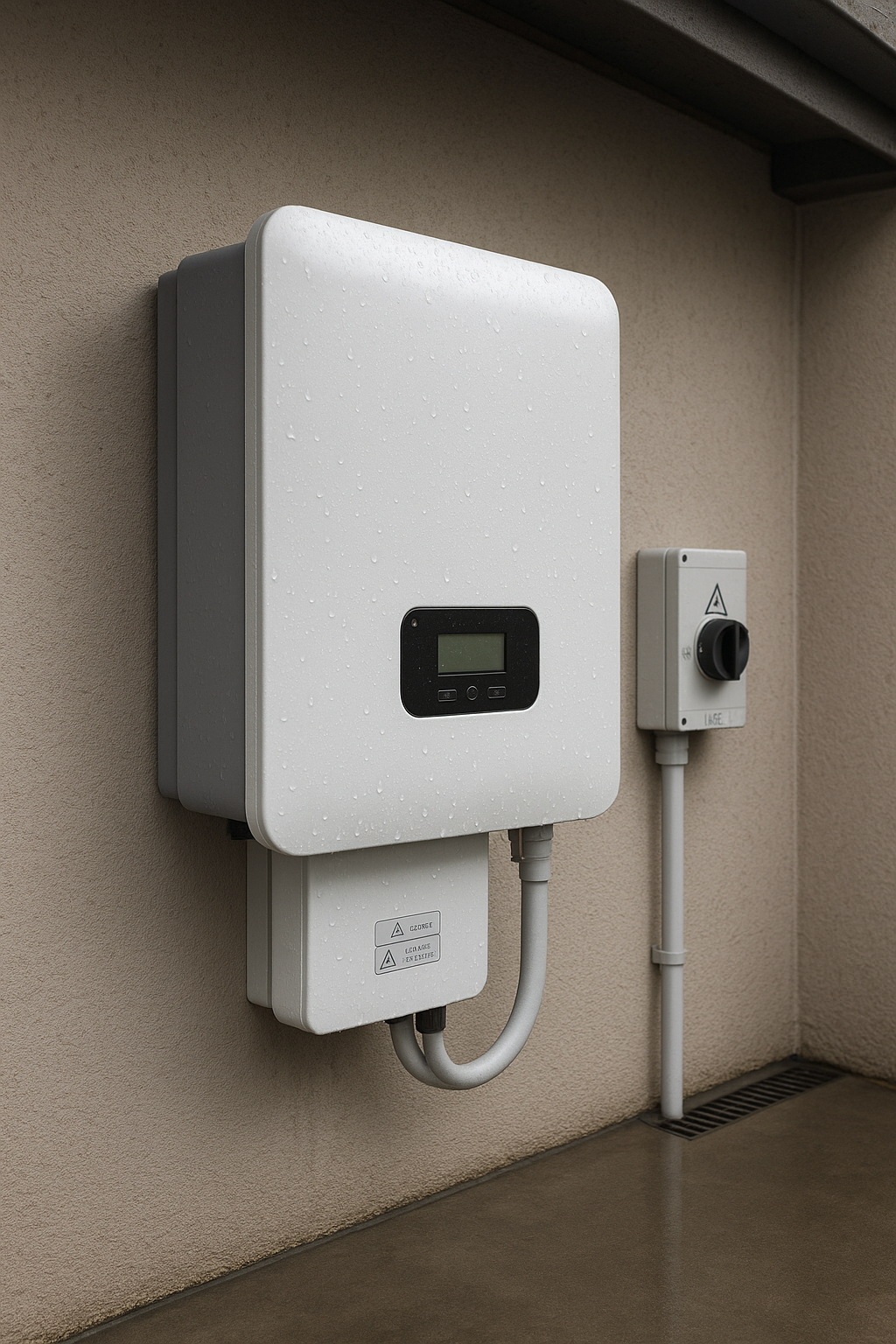
At the inverter, check for flood or mud lines on walls, and ensure vents are free of mud and leaves. If the unit has a screen, confirm it shows normal operation. Monitoring apps can help; compare today’s kilowatt‑hour output against a recent clear day with similar temperatures. Unusual dips or one string lagging another could signal issues.
Flooding around the inverter location is a serious warning sign. If you smell burning plastic, isolate the inverter and call an electrician.
more household tips, see the Energy.gov.au guidance for households and the Clean Energy Council home maintenance advice which explain how to monitor your system, keep cables secure and arrange regular servicing.
When to book a technician
Book a licensed professional if you see structural movement, exposed conductors, tripped protection devices, flooding or repeated inverter errors. A storm can shift mounting hardware or compromise wiring, and only a qualified electrician should test and recommission the system.
Arrange a professional inspection every five years or after severe weather. Certified installers have specialised tools to test wiring and protection devices and can detect damage that isn’t visible from the ground.
During a service visit, technicians perform electrical tests, thermal scans, torque checks on fittings, inspect roof hardware and conduct isolation checks. They also audit monitoring data to spot trends. Early reports with photos and dates help with warranties and insurance claims, so document any damage you see from the ground.
If you keep a maintenance log of previous inspections and any issues you’ve noted, it will support warranty claims and make it easier for insurance assessors to understand the timeline of events.
For routine tune‑ups and safe cleaning options, explore our Services. If your system is flooded or damaged and you need urgent support, please Contact Us right away.
For insights into how storms affect demand across the grid, the AEMO storm and demand insights provide context on why swift repairs help keep the network resilient.