
Bushfire Smoke & Dust: Why Your Output Drops and How to Recover
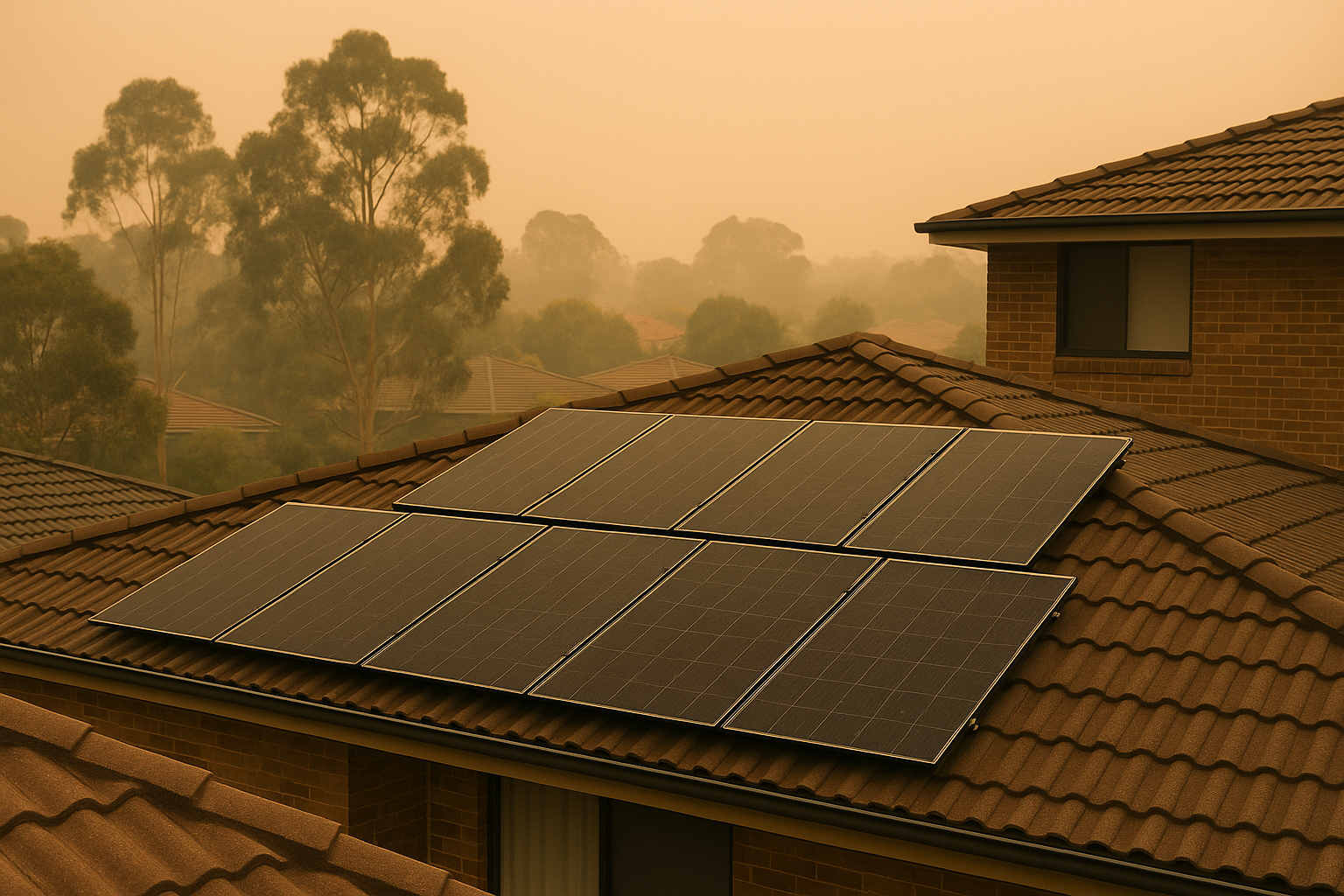
Bushfire smoke solar panels can see a sharp drop in power because tiny aerosols scatter sunlight and ash leaves a film on your modules. Smoke reduces direct light, while dust films block the glass itself. This quick guide will explain why that happens and offer practical ways to monitor, clean and recover your system safely. Always consider professional help for anything beyond a simple rinse.
In Australia the bushfire season now starts earlier and lasts longer. Understanding how haze and ash affect your rooftop system helps you plan ahead. With many households relying on solar for daily needs, maintaining performance through smoky weeks is both an economic and safety priority.
Smoke vs sunlight basics
Bushfire smoke is full of aerosols, including fine PM2.5 particles that scatter light. The scattering turns direct beams into diffuse light, which is less useful for photovoltaic cells and softens the midday peak. Heavy smoke can also bring down small ash particles that settle on your array.
As ash and dust settle, they form a thin film over the glass. That film acts like a shade cloth, blocking the path of light into the cells. In combination with smoke haze, this film cuts total irradiance and reduces the efficiency of each module.
Once the air clears your system’s output often rebounds quickly, but residue can remain stuck on the glass until it’s rinsed away by rain or gentle cleaning. Never use harsh chemicals; they can permanently damage coatings.
For independent maintenance advice and standards, see the Clean Energy Council home maintenance advice. To ride through smoky days, consider Battery Storage, which keeps surplus energy for later when conditions improve.
Smoke reduces ultraviolet and visible wavelengths; diffuse light still produces some power but not as much. Heavier PM2.5 saturates the air, leaving your array starved for photons. Tilt and orientation matter too: flat or low‑tilt modules collect more ash than steeper arrays. Dry air and static electricity can help dust stick to the glass, so a light rinse may be necessary even after rain.
Monitoring output dips
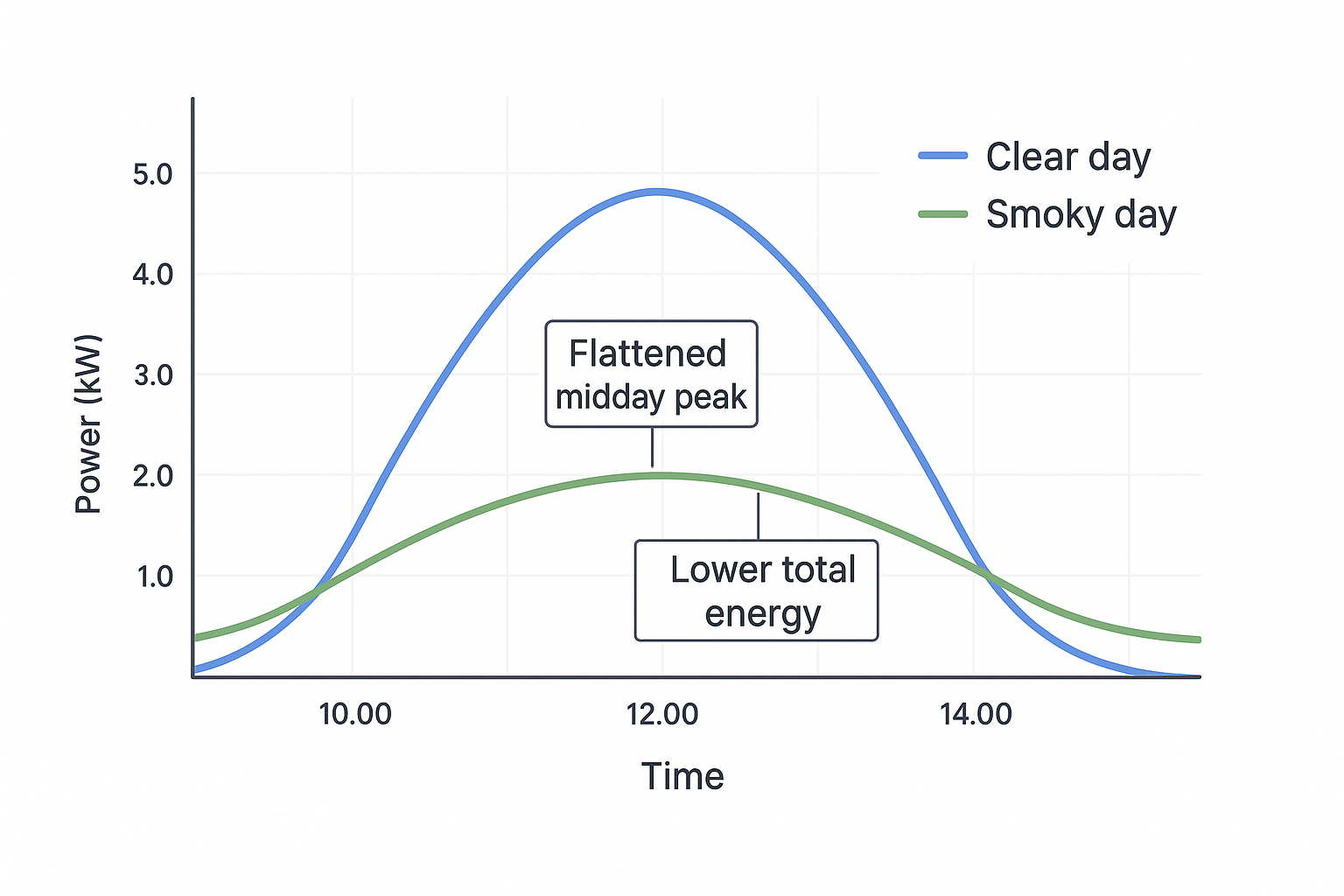
Your inverter or monitoring app can help you spot smoke‑related dips. Check daily kilowatt‑hours, midday peak power and the shape of the power curve. A clear day produces a smooth bell‑shaped curve with a high noon peak; smoke and dust flatten the curve and reduce overall energy.
Typical signal checks
|
Check |
What to compare |
What it suggests |
|
Daily kWh vs last clear day |
Same temps, similar loads |
Broad reduction points to smoke/dust |
|
Midday peak vs morning/afternoon |
Flattened midday peak |
Haze or residue limiting irradiance |
|
String-to-string balance |
One string down more |
Localised dust or partial soiling |
|
Inverter alerts |
Temp or grid warnings |
Heat or voltage compounding the issue |
Examples only. Use your installer’s guidance and your specific monitoring app.
Consider comparing your system’s performance with that of neighbours on the same street; if everyone sees a similar dip, smoke is likely the culprit. Some monitoring platforms also track local air‑quality indices, providing context when a haze event coincides with a power slump. Keeping an eye on the broader pattern can help you decide when to clean or call for service.
For broader household advice during smoky periods, see the Energy.gov.au guidance for households. Compare a clear day to a smoky day with similar temperatures and season; look at each string’s performance and any inverter alerts. A flattened midday peak or one weak string often indicates haze or localised soiling, while a sharp drop across all strings suggests a wider smoke event.
Cleaning and recovery tips
- Run the shutdown procedure before any cleaning.
- Never clean hot glass; choose a cool morning.
- Use fresh water and a soft brush or sponge; avoid detergents and high‑pressure jets.
- Keep your footing secure; do not step on panels.
- Book a professional clean if your roof is steep, your tiles are fragile or heavy ash or bird debris has collected.
- Reset expectations: the first clear day may not equal full recovery if residue remains; schedule a re‑check after cleaning.
Always work from a secure position; if you need to climb, use appropriate fall protection or engage a professional. Avoid spraying water upwards from the ground, as high‑velocity jets can damage seals and wiring
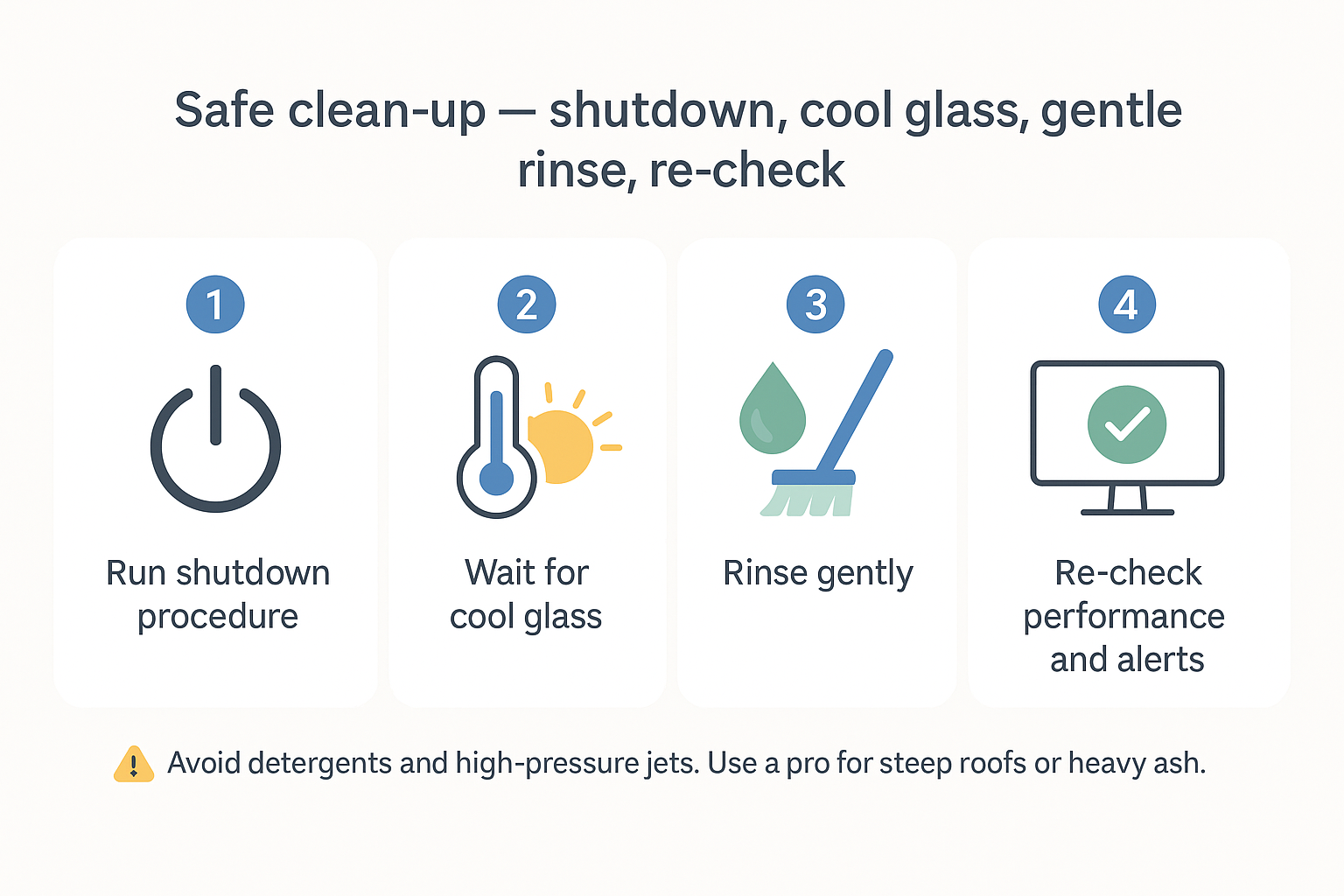
If you are unsure about safe rinsing, start with our cleaning tips. For more general advice about maintaining rooftop systems, consult the Ausgrid safety information and the AEMO notes on smoke and solar irradiance. Finally, consider how Battery Storage can make your home more resilient during smoke events and grid disturbances by storing excess solar when conditions are good.
Regular maintenance every couple of years keeps your array efficient, ensures mounting hardware remains secure and upholds warranties. Cleaning after a fire event is just one part of long‑term care and gives you the confidence that your system will deliver when the skies clear again.