
Dynamic Export Limits in NSW: What They Mean for Your Solar
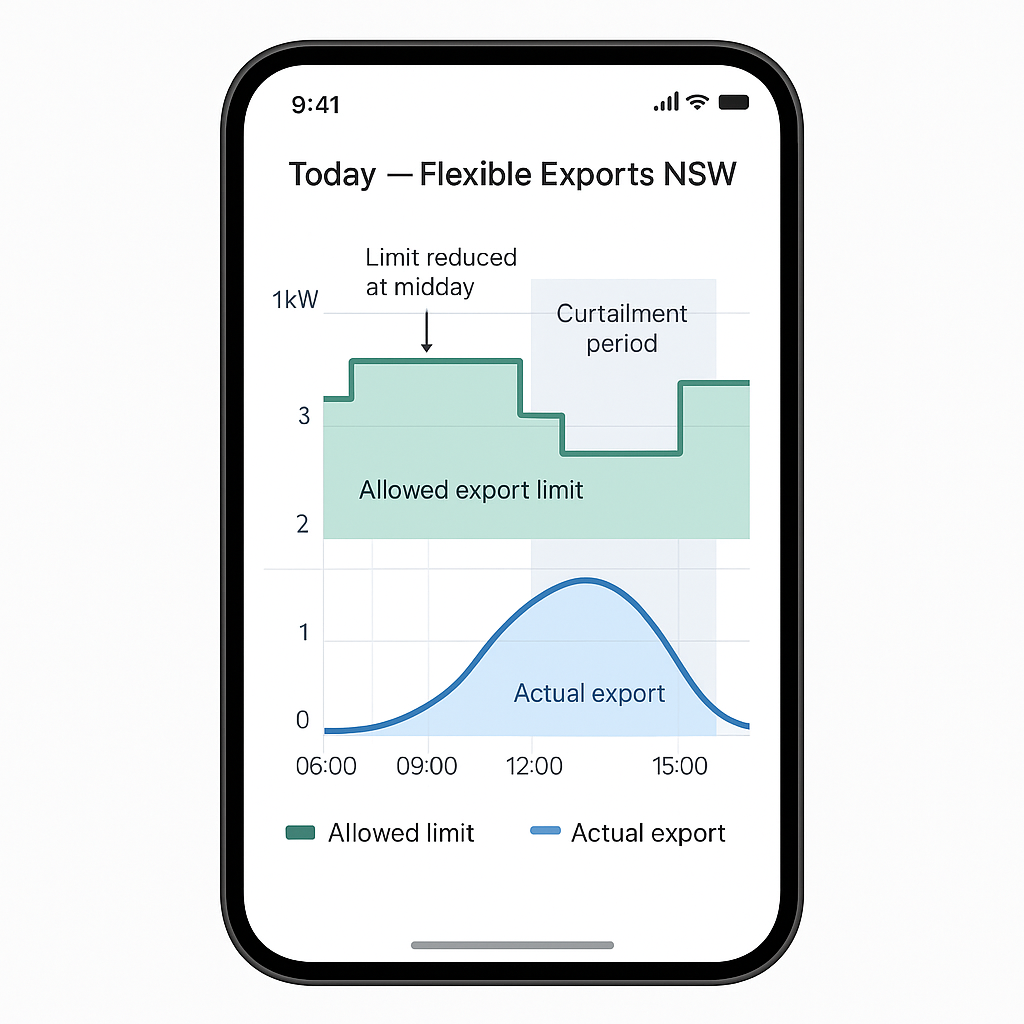
Dynamic export limits NSW are a new reality for rooftop solar owners in Sydney and across New South Wales. They allow distribution networks to remotely adjust the amount of power you can send back at different times of the day. Smart meters and network rules mean your export capacity isn’t fixed any more, so it pays to understand how to design and operate your system for flexible conditions. This guide explains how the limits work, what they mean for your bill and payback, and how to design and monitor your system for success.
What are dynamic export limits
Traditional fixed export limits place a single cap, often 5 kW per phase, on what your inverter can feed into the grid. They don’t change throughout the day. Dynamic export limits, also called flexible exports NSW, change that rule. Instead of one number, the limit varies based on real time network conditions. When the local network has capacity, you can export more; when the grid is congested, the limit ramps down to protect voltage and equipment.
In practical terms, your export limit might be allowed up to 10 kW in the morning, drop to one or two kilowatts during the midday surge when everyone’s panels are producing, then rise again in the afternoon. Some networks also schedule zero export windows at peak constrained times. These variations happen automatically via your meter or inverter and follow signals sent by your Distribution Network Service Provider, or DNSP. You won’t see exactly the same pattern every day, but curtailment is most likely when solar output is high and local demand is low.
Why do DNSPs manage exports at all? The grid was built for one‑way power flow. When too many homes push solar back simultaneously, voltage can rise and transformers overheat. By adjusting your limit, networks keep the system safe and avoid expensive infrastructure upgrades. From a homeowner’s perspective, the key takeaway is that dynamic limits aren’t something you can control, but there are ways to work within them.
For more information on how dynamic limits are determined, see the Ausgrid export guidance.
How it affects your bill and payback
Export curtailment can reduce your feed‑in revenue, but the impact varies widely. Under a fixed 5 kW cap, a typical 8 kW array might export 12–16 kWh per day in Sydney, earning around $1–$2 at today’s feed‑in rates. A dynamic 1–5 kW limit could push more energy into self‑use, reducing exports to 6–12 kWh while increasing savings on your bill. The most restrictive scenario is zero‑export periods, where you must use or store all your generation. In each case, shifting loads and adding modest battery storage reduces the effect on payback time.
Export limits in practice — three common scenarios
|
Scenario |
Limit type |
Day profile |
Self‑use share |
Typical export |
What to do |
|
Fixed 5 kW cap |
Fixed |
High midday cap |
35–45% |
12–16 kWh/day |
Add timers for hot water and EV |
|
Dynamic 1–5 kW |
Variable by time |
Midday curtailments |
45–60% |
6–12 kWh/day |
Shift loads; consider a 5–10 kWh battery |
|
Zero‑export periods |
Dynamic blocks |
Peak‑constrained hours |
60–75% |
0–6 kWh/day |
Aggressive timers; aim EV charging at midday |
Examples only. Your DNSP and tariff determine exact limits and outcomes.
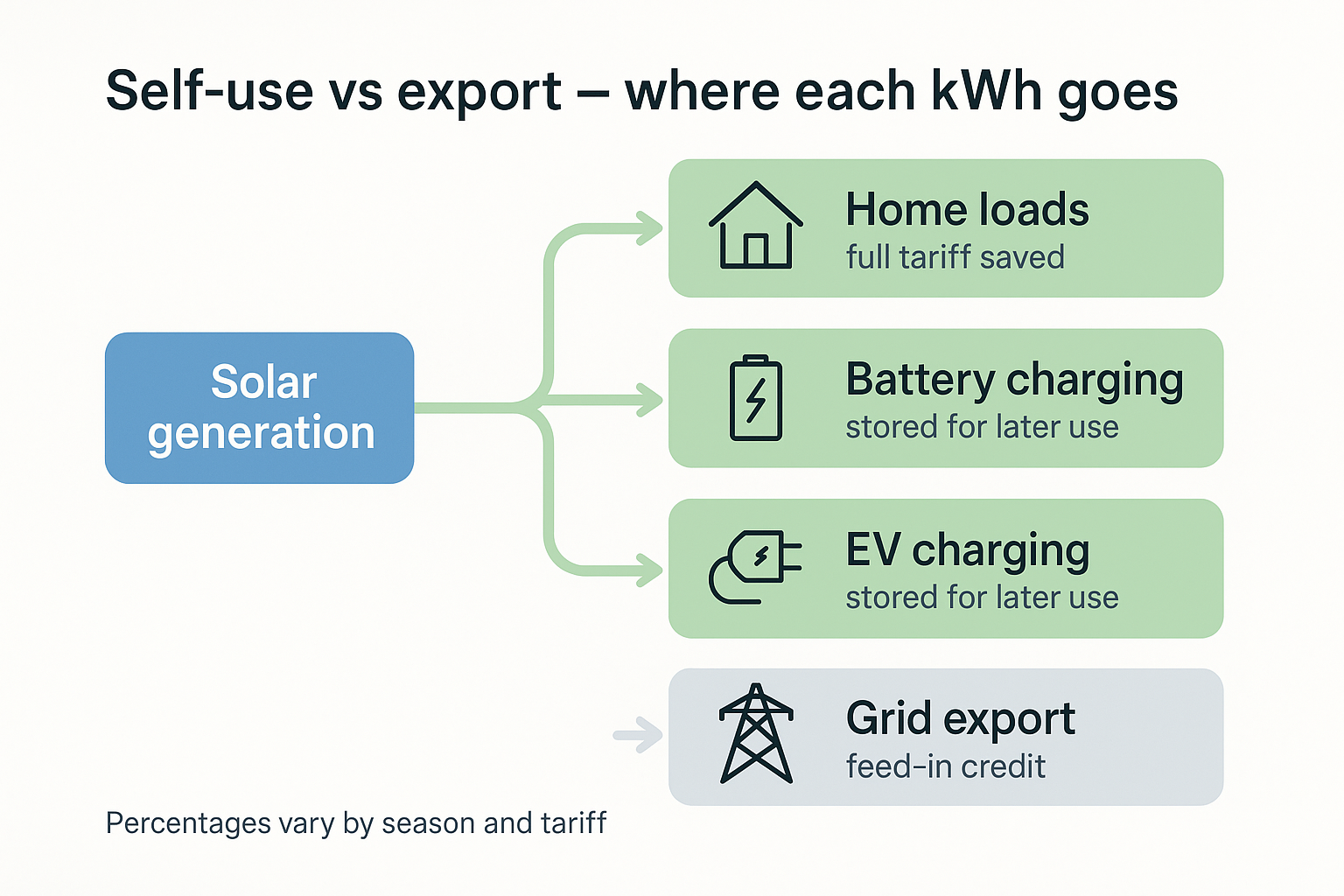
In simple dollars, each kilowatt‑hour you divert to self‑consumption saves you the full tariff, often 25–35 cents, whereas each exported kilowatt‑hour earns only 5–8 cents. With a flexible limit, the value of self‑use is amplified. Shifting appliances to sunny periods and installing a modest battery ensures you’re not spilling energy during curtailment windows. Always check Endeavour Energy solar export rules or your local DNSP for specific limits.
Designing your system for flexible exports
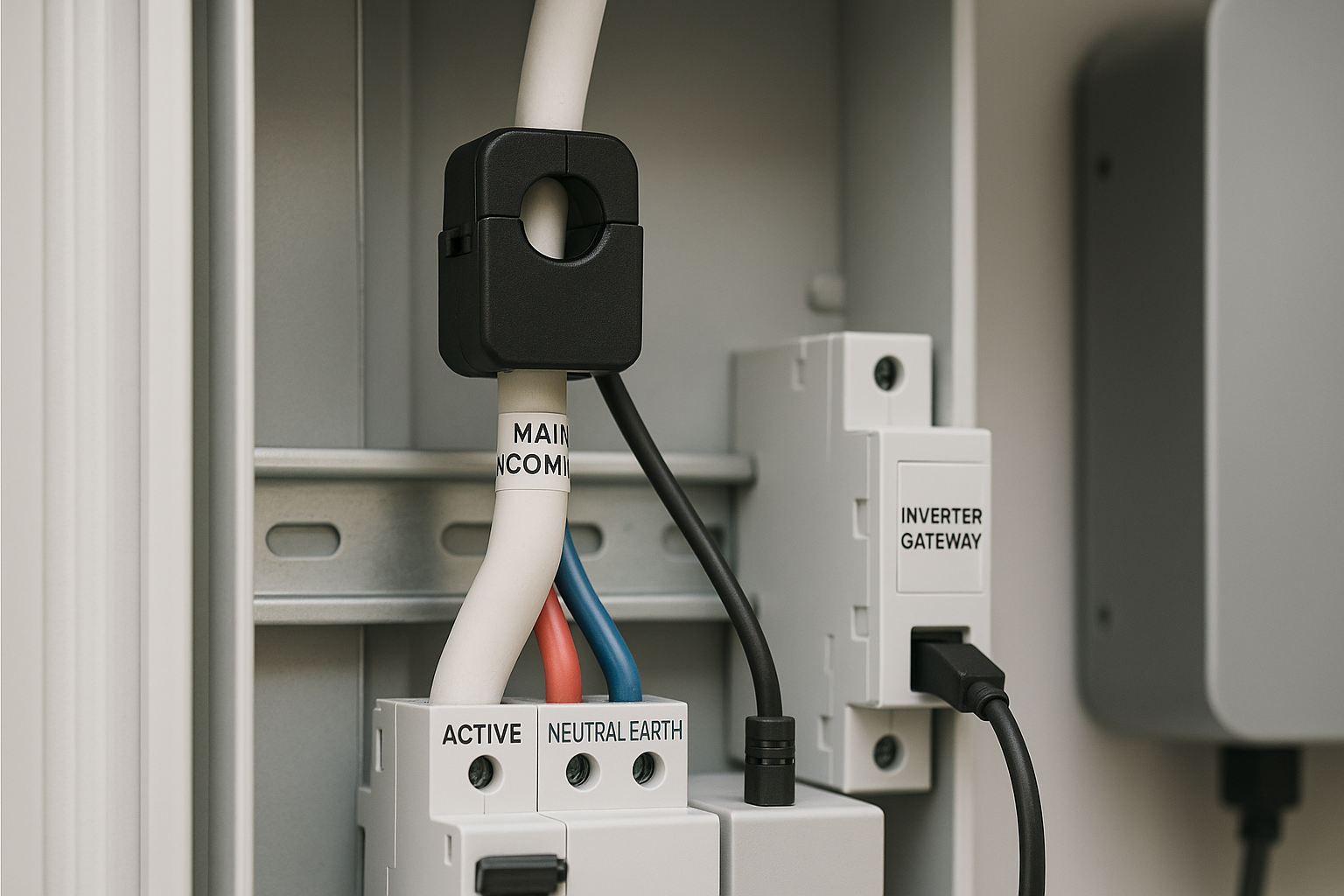
Your hardware must be ready for remote control. Choose an inverter that supports export control and the Common Smart Inverter Profile (CSIP‑AUS) used by NSW networks. Install a current transformer (CT) clamp on your main feed so your inverter can accurately measure and throttle export.
Size your array to meet your own daytime loads rather than chasing feed‑in revenue. A slightly undersized inverter matched to your consumption will hit export ceilings less often and keep efficiency high. Oversized systems risk more curtailment.
Shift loads with timers on hot water, pool pumps, dishwashers, washing machines and EV chargers. Using midday solar avoids drawing from the grid later. Even small changes like running the dishwasher after lunch can make a difference. A modest five‑to‑ten kilowatt‑hour battery soaks up midday and covers the evening peak, smoothing export flows. It can keep you self‑sufficient when dynamic limits go to zero. For tailored designs and DNSP approvals, explore our Services.
For deeper insights into how consumers are using batteries and other energy resources under flexible exports, see the AEMO consumer energy resources insights.
Monitoring and alerts that actually help
Your monitoring app is your friend when exports are dynamic. Check how often your system hits the export ceiling and for how long. Most apps show when curtailments start and end.
Set up useful alerts. Notifications like “export limit reached” or “curtailment period” let you know when the network has dialled you down. A battery idle alert can remind you to run appliances or charge your EV in the sun. To see how your meter enables dynamic control, start with Energy.gov.au smart meters.
Use that information to fine tune your timers and loads. If midday curtailments are common, shift the pool pump or dishwasher earlier, or top up your EV at midday on weekends. Don’t worry about getting every setting perfect from day one. It’s normal to adjust things as you learn how flexible exports work on your street. If you need help with settings or approvals, reach out via Contact Us.