
Heat Pump Hot Water with Solar: Timers vs Diverters vs Batteries
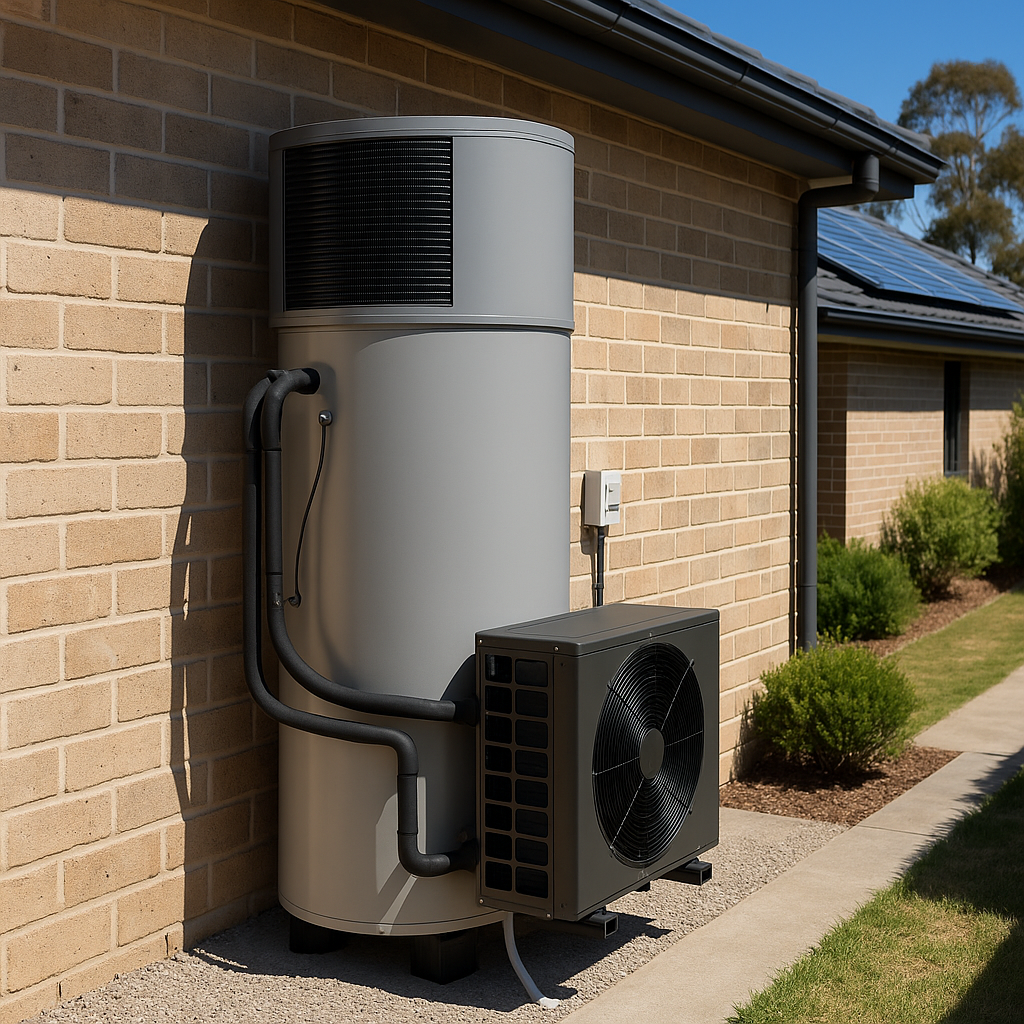
Heat pump hot water solar pairing is a smart way to cut household energy bills. The aim is to heat your tank when the sun is high and reduce reliance on the grid. In this guide we demystify simple schedules, compare solar diverter vs timer options and explain when a small battery can make sense.
Why heat pumps love daytime solar
Heat pumps use a compressor to move heat from the air into water, delivering roughly three to four times more heat than the electricity they consume. A 300‑litre heat pump only needs about 4–5 kWh to heat a tank to 60 °C, compared with around 14 kWh for a resistive system. Because they run steadily, aligning operation with daytime solar smooths exports and reduces grid purchases. For a deeper look at efficient hot water technology, check the Energy.gov.au hot water guidance.
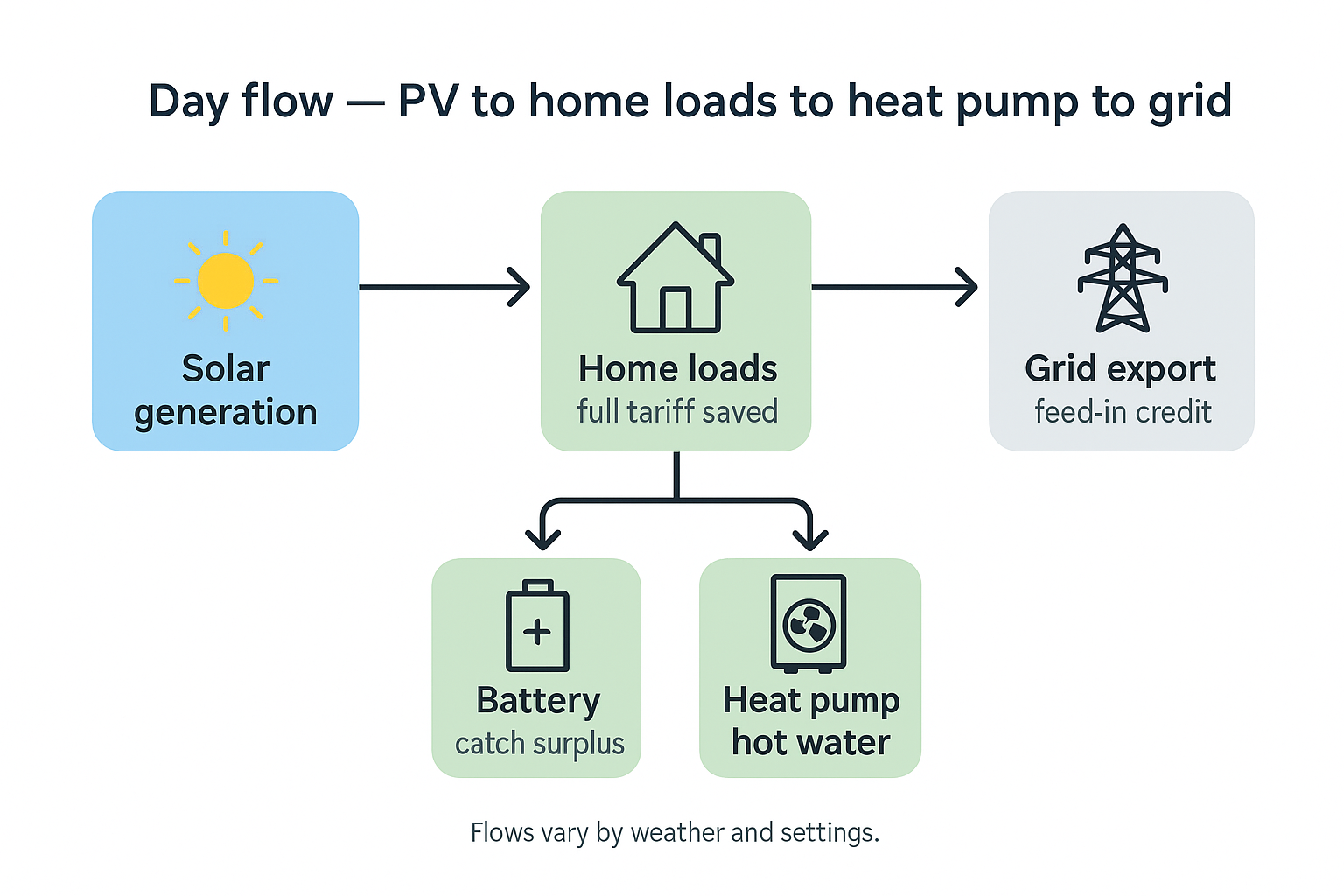
In Sydney a typical rooftop solar array peaks between 10 am and 2 pm, when the sun is high and your system exports more energy than the house needs. If your heat pump is scheduled to run then, it absorbs this midday surplus and reduces exports that earn only a small feed‑in tariff. That midday boost also reduces the draw on the grid later in the evening when peak tariffs apply, making use of free sunshine rather than expensive electricity.
Heat pumps run quietly for several hours. By warming your water during the day you store energy as heat for evening use. Combined with good insulation and a tempering valve to deliver safe temperatures, daytime heating helps families save money and still enjoy reliable hot water.
Timers vs diverters: pros and cons
The simplest way to align a heat pump with solar is to set a timer. Most units have an internal clock or can connect to an external timer. A 10 am–2 pm window is a good starting point in Sydney because it captures midday generation before evening showers. Adjust the window seasonally, but it’s a cheap and reliable way to run your heat pump when solar is abundant. For more on local time‑of‑use periods, check the Ausgrid time-of-use tariffs.
Timer vs diverter at a glance
|
Control |
How it works |
Best for |
Pros |
Watch-outs |
What to do next |
|
Timer |
Fixed daytime window |
Regular sunny days |
Simple, cheap |
Needs tank at temp before evening |
Set 10 am–2 pm, adjust seasonally |
|
Diverter |
Follows surplus PV |
Variable weather |
Maximises sunshine use |
Can trickle on cloudy days |
Enable surplus-only, check minimum power |
|
Hybrid |
Timer + diverter top-up |
Mixed patterns |
Reliable hot water |
Slightly higher complexity |
Timer first, diverter as backup |
Examples only. Your tariff, heater model and weather determine outcomes.
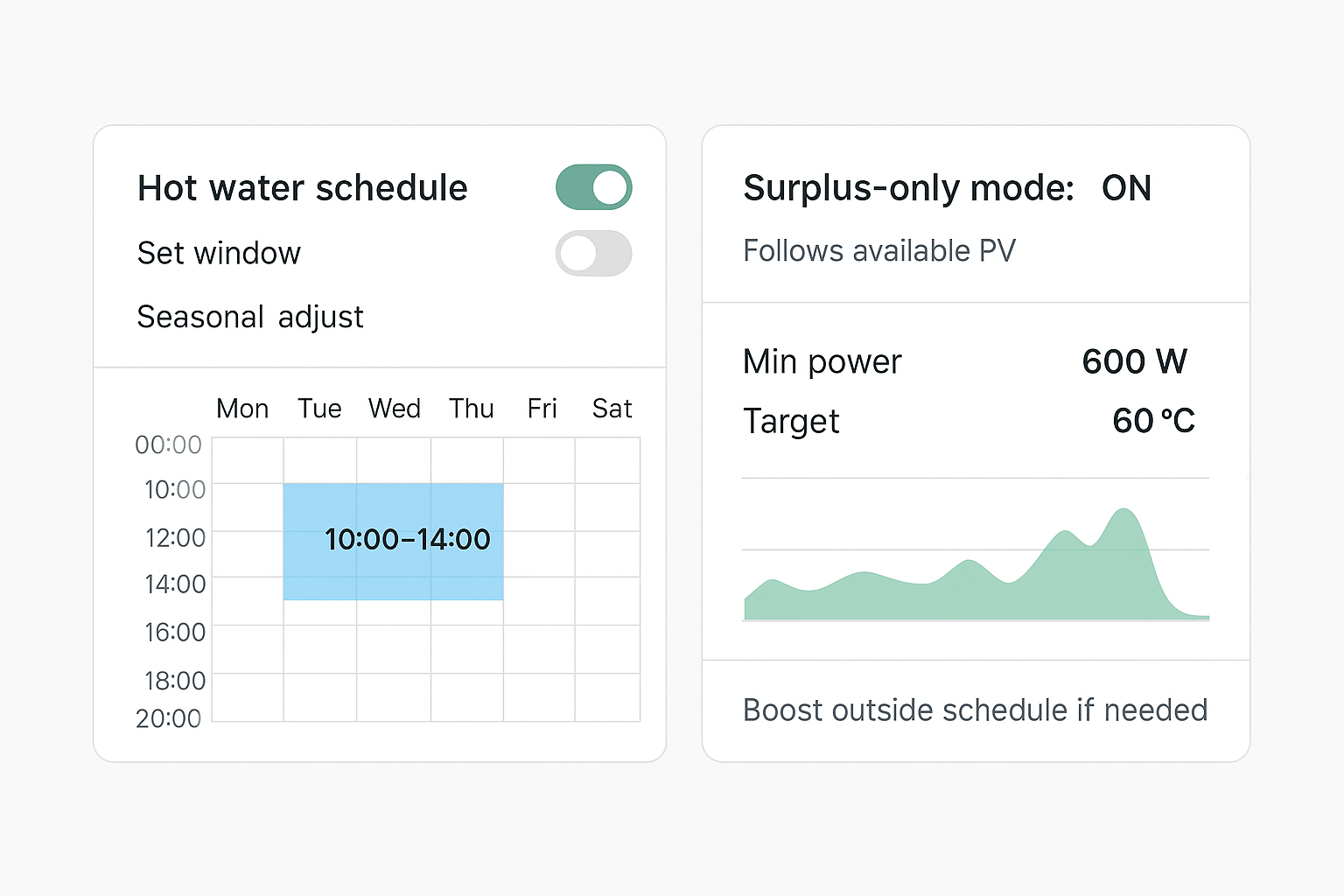
Solar diverters monitor your inverter and divert surplus electricity to the heat pump instead of exporting it. They adjust the power level, so the compressor might run at lower power on cloudy days. Diverters maximise self‑consumption when weather is variable, but on dark mornings they can take longer to heat the tank. Some units have a minimum power threshold.
A hybrid approach uses both a timer and a diverter. Program the timer for a daily block and enable the diverter to top up outside that window. This ensures hot water is ready before dinner and mops up extra solar later in the afternoon. Hybrid control adds some complexity but suits households with unpredictable routines.
Battery or bigger tank: which suits your home
Adding a small battery (5–10 kWh) can enhance your system by storing midday solar and releasing it later. This means the heat pump can draw on stored energy in the evening if the tank isn’t fully heated. However, batteries are expensive and may not pay off compared with simply upsizing the tank.
For many families a larger tank is a simpler way to store more hot water. A bigger tank holds heat generated during the day and provides enough for morning showers. Couples may be comfortable with a 200‑ to 250‑litre tank, while larger households might prefer a 300‑ or 315‑litre unit.
When considering upgrades, check that your plumbing and electrics suit the new system and that you have space. An installer can advise and coordinate changes. For model compatibility and neat installs, book through our Services page. The NSW energy efficiency programs offer rebates or low‑interest loans that can reduce payback time.
Some households install a modest battery along with a larger tank for extra flexibility in winter. A small battery can handle the morning reheat and provide a buffer on cloudy days while the large tank stores energy as hot water. Assess your shower timing and budget to decide whether to invest in battery storage now or wait.
Typical savings and simple settings
Switching from a conventional electric hot water system to a heat pump cuts electricity use by roughly two thirds. Heating a 300‑litre tank with a resistive element consumes about 14 kWh per day, whereas a heat pump uses 4–5 kWh. On a time‑of‑use plan this can save hundreds of dollars a year, especially when you run the heat pump during off‑peak or solar soak periods. For kWh values and typical bill savings, see the AEMO demand periods and other market information.
Programming a timer is straightforward. Start with a 10 am–2 pm window. In winter extend it to 9 am–3 pm to catch weaker sunlight. A tempering valve ensures water at the taps is safe by blending hot water with cold to around 50 °C. Check the valve annually and adjust if needed.
Most heat pumps also allow a periodic high‑temperature boost to prevent the growth of Legionella bacteria. Set your unit to heat the tank to at least 60 °C once a week. This boost runs outside your usual schedule, uses more electricity, but ensures your water is hygienic.
Monitor your system’s performance through your inverter app or electricity bills. If you notice the tank isn’t reaching the set temperature, adjust the timer or consult your installer. Small changes in schedule or diverter settings can make a big difference. If you need help with settings, reach out via Contact Us.
Harnessing midday sun for your hot water delivers reliable comfort at a lower cost. With the right combination of timer settings, diverter controls and, if required, a battery or larger tank, you can adapt your system to your household’s needs. Hot water with solar Sydney residents will appreciate the difference. Tune your settings or get tailored advice via our Contact Us page.