
Heatwaves & Solar: Do Panels Overheat in Australian Summers?
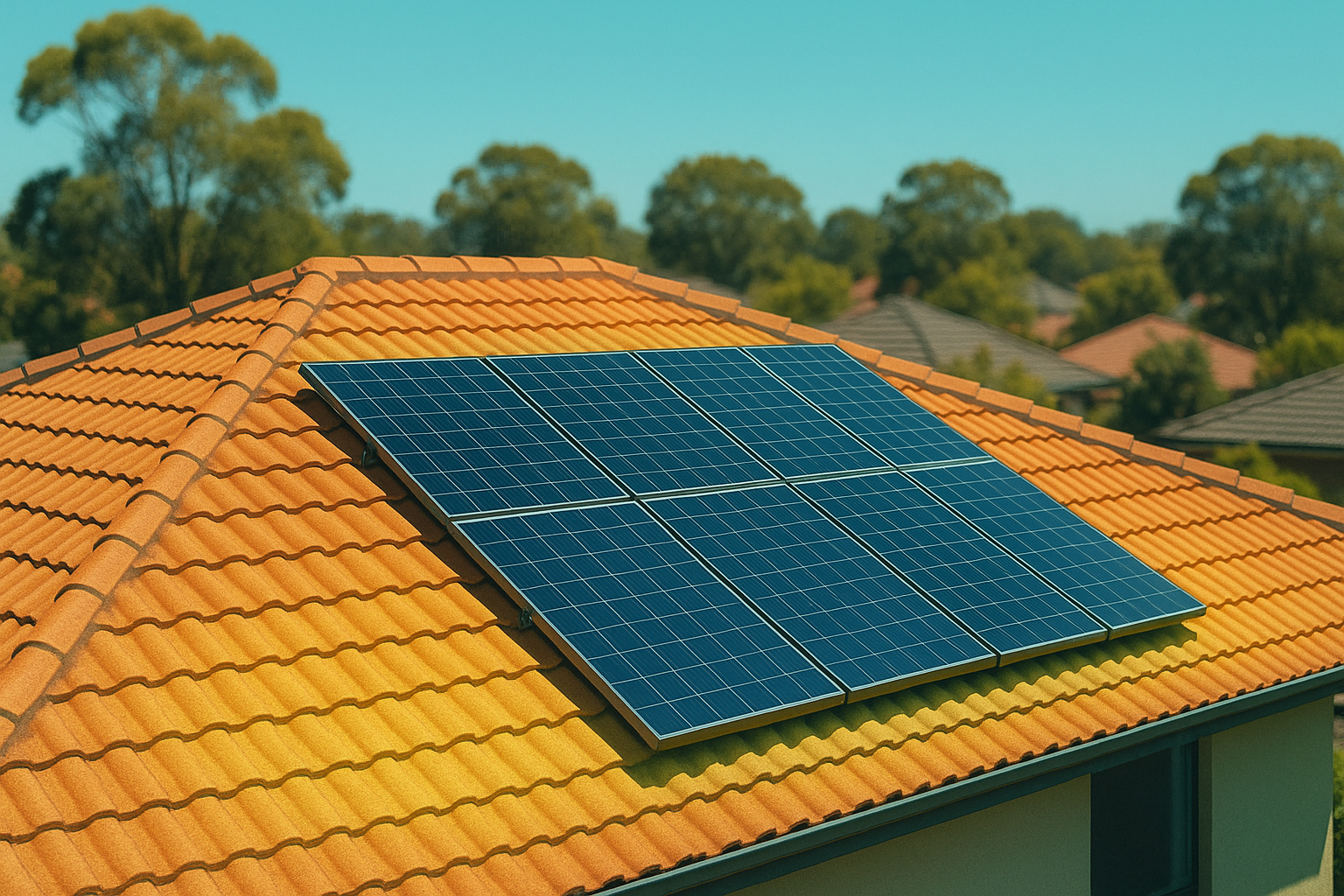
Australia’s long hot summers often raise questions about solar panels overheating. Many homeowners worry that extended heatwaves will damage rooftop arrays or slash output. In this guide an experienced installer answers the common questions and gives clear, practical advice. We focus on three themes: the temperature coefficient of panels, how inverters protect themselves through derating, and why airflow and mounting design trump all when the mercury climbs.
Efficiency vs temperature
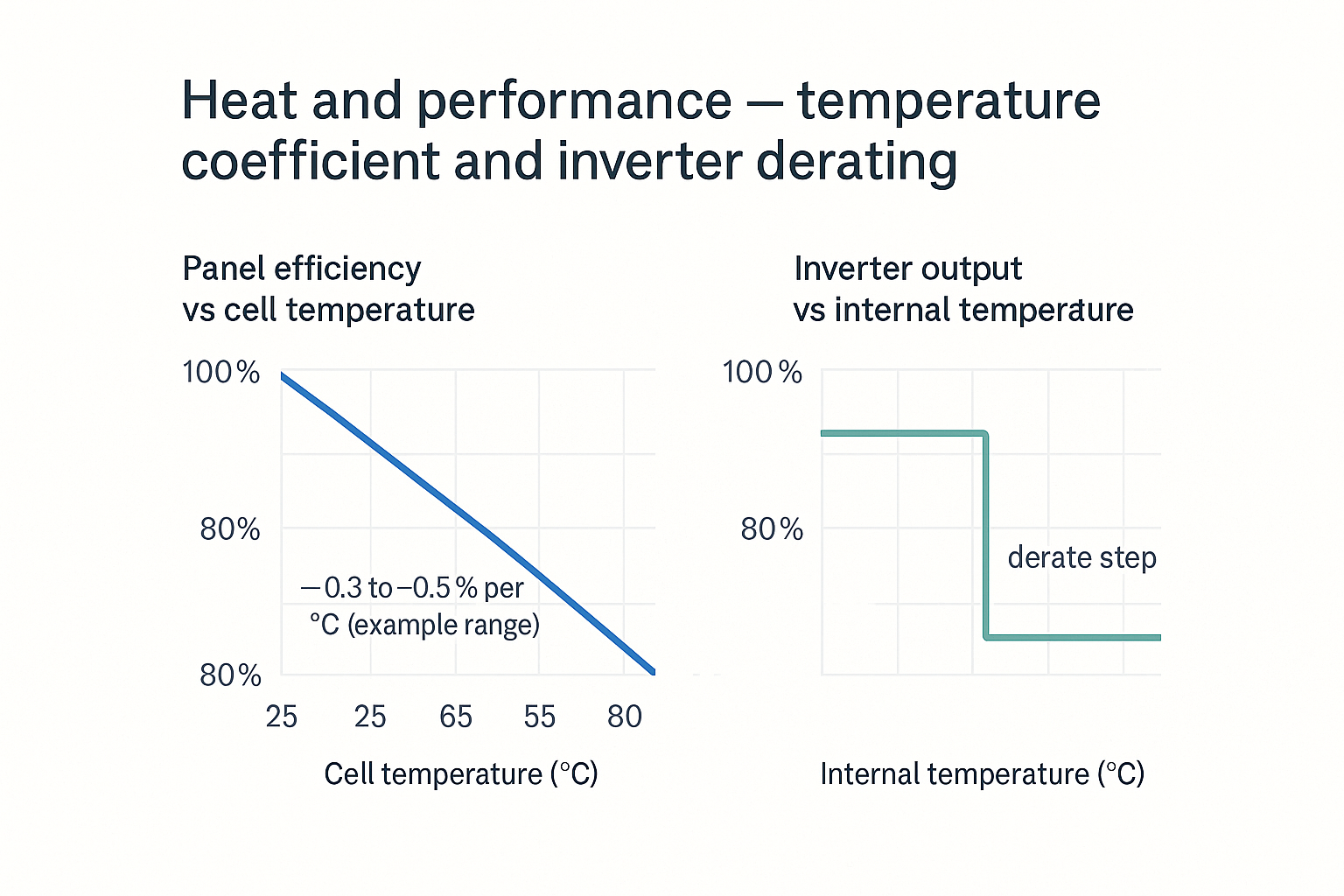
Solar panels are most efficient when their cells sit around 25 °C. As the cells heat up they produce less voltage and the overall output drops. This effect is measured with the temperature coefficient – expressed as a percentage change per degree above 25 °C – and it is printed on every module’s datasheet. Many modern panels have a coefficient between −0.3 and −0.5 % per degree. In plain terms, if a module rated at 400 W sits at 60 °C it may lose roughly 10–17 W due to heat.
Homeowners often think a darker panel colour or light‑coloured roof can solve heat problems. Colour does affect how quickly surfaces absorb sunlight, but the real driver of heat build‑up is airflow. Mounting hardware should allow a gap of at least 100 mm between the roof and the module frame so that air can flow under and over the panels. This gap helps carry away heat, especially when afternoon breezes kick in. A lighter roof may reflect more sunlight, but without a proper gap the air beneath still stagnates and cells stay warm longer.
Even a few degrees can make a difference to daily yield. For example, a 6.6 kW system with panels rated at a −0.4 % coefficient running 15 °C above their standard test temperature will lose around 4 % of its potential generation. Over the course of a long heatwave that can equate to tens of kilowatt‑hours. The good news is that the effect is reversible: when the temperature falls, output returns immediately. Design for airflow first and you will minimise these losses.
Some customers install their arrays flush to the roof for aesthetic reasons. Without a gap the panels operate close to roof temperature and the cells have little chance to cool. Even an extra 20 mm can improve heat dissipation. Check the Clean Energy Council guidance on inverter installation before making any design changes. It is also worth reading the Energy.gov.au household solar information on how modules behave in different climates. Remember: design for airflow first.
Inverter location & ventilation
While panels suffer a gradual drop in output with heat, inverters have a built in safety feature called thermal derating. When internal components reach a threshold temperature the inverter reduces its output current to protect electronics from damage. This reduction can be sudden and more severe than the panel’s temperature related losses. It only occurs when ambient temperatures are very high or if the unit sits in direct sun.
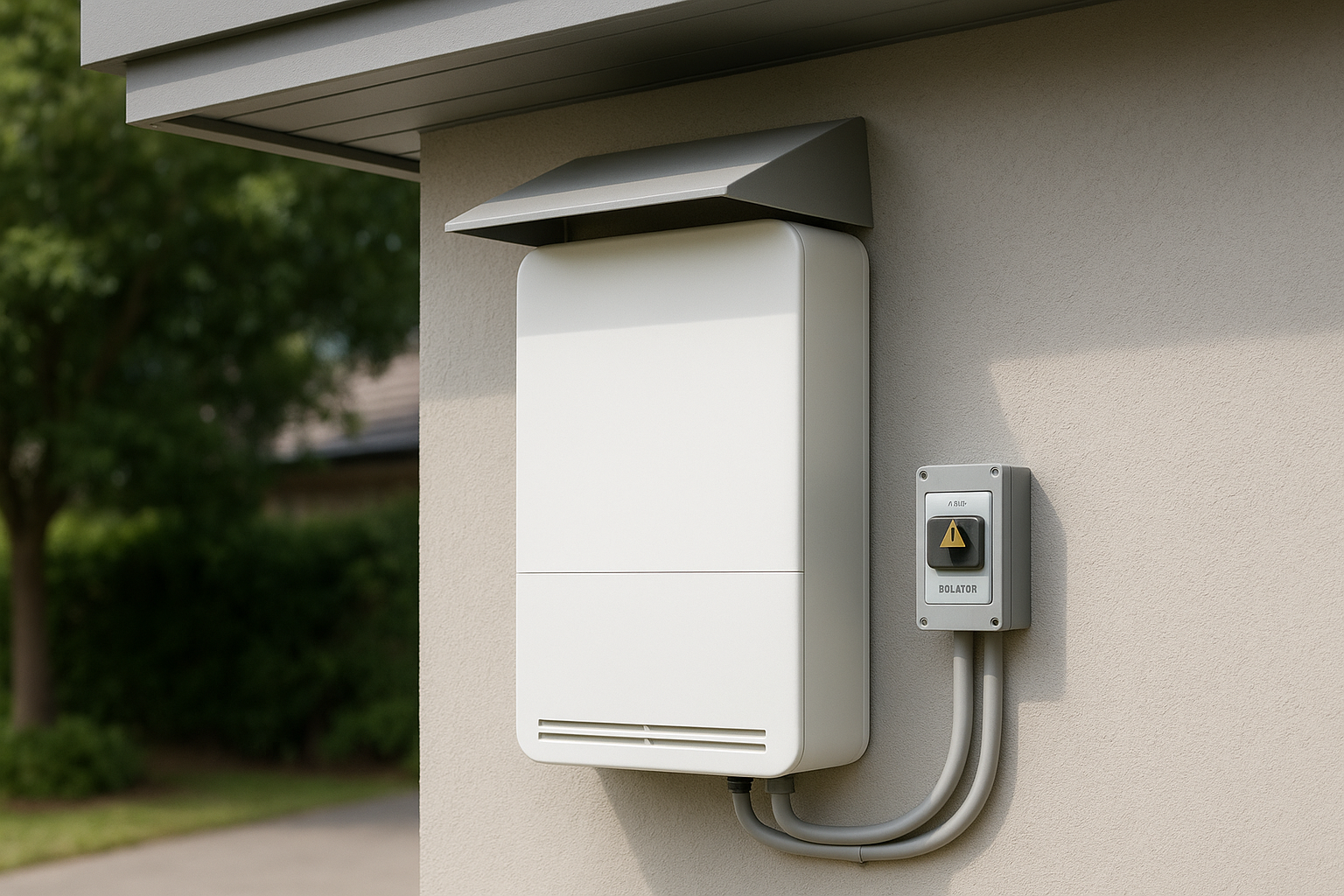
Best practice is to mount inverters on a shaded wall, away from midday and afternoon sun. Under an eave on a south or east facing wall is ideal in most Australian homes. The enclosure should have clear vent space on all sides, and cables should be routed neatly so they do not impede airflow. Avoid placing units in garages with no ventilation or in full sun on a metal fence. Louvred housings and purpose‑built shade hoods help maintain airflow while keeping rain off.
Older models sometimes ran hot at relatively low output, but modern systems paired with smart inverters can manage heat more gracefully. These devices monitor cell and ambient temperature, adjust their power curve and communicate with monitoring apps. If you need to relocate equipment or upgrade, check the Ausgrid advice on rooftop installations and follow the AEMO commentary on peak demand and heatwaves so you understand local grid constraints. Keeping inverters shaded and ventilated means you will rarely see thermal derating in Australian conditions.
User tips for extreme heat
Heatwaves place stress on solar equipment but a few simple actions keep your system running safely:
- Check for new obstructions: Storms and summer growth may leave branches, leaves or debris near arrays and inverters. Clear them away to maintain airflow.
- Confirm monitoring is live: Make sure your monitoring app or portal is communicating. Watch for alerts or heat related warnings. Many apps will notify you if the inverter derates or shuts down unexpectedly.
- Shift flexible loads: Run dishwashers, washing machines and pool pumps during late morning or early afternoon when your system is at its strongest. This reduces strain on the grid and makes the most of your generation.
- Avoid washing panels during peak heat: Cold water on a hot glass surface can cause thermal shock. If cleaning is required, do it on a cool morning using a soft brush and water.
A few minutes of attention each season can prevent bigger issues. For more detailed guidance on routine checks, see Maintenance 101 and follow the steps suitable for homeowners. You can also explore the Clean Energy Council guidance on inverter installation for installer level advice. If you suspect your system has been underperforming, request a professional review. Our team can help assess airflow, adjust equipment settings and, if needed, upgrade to smart inverters that handle heatwaves more effectively.