
Seasonal Solar Maintenance: Summer & Winter Checklists
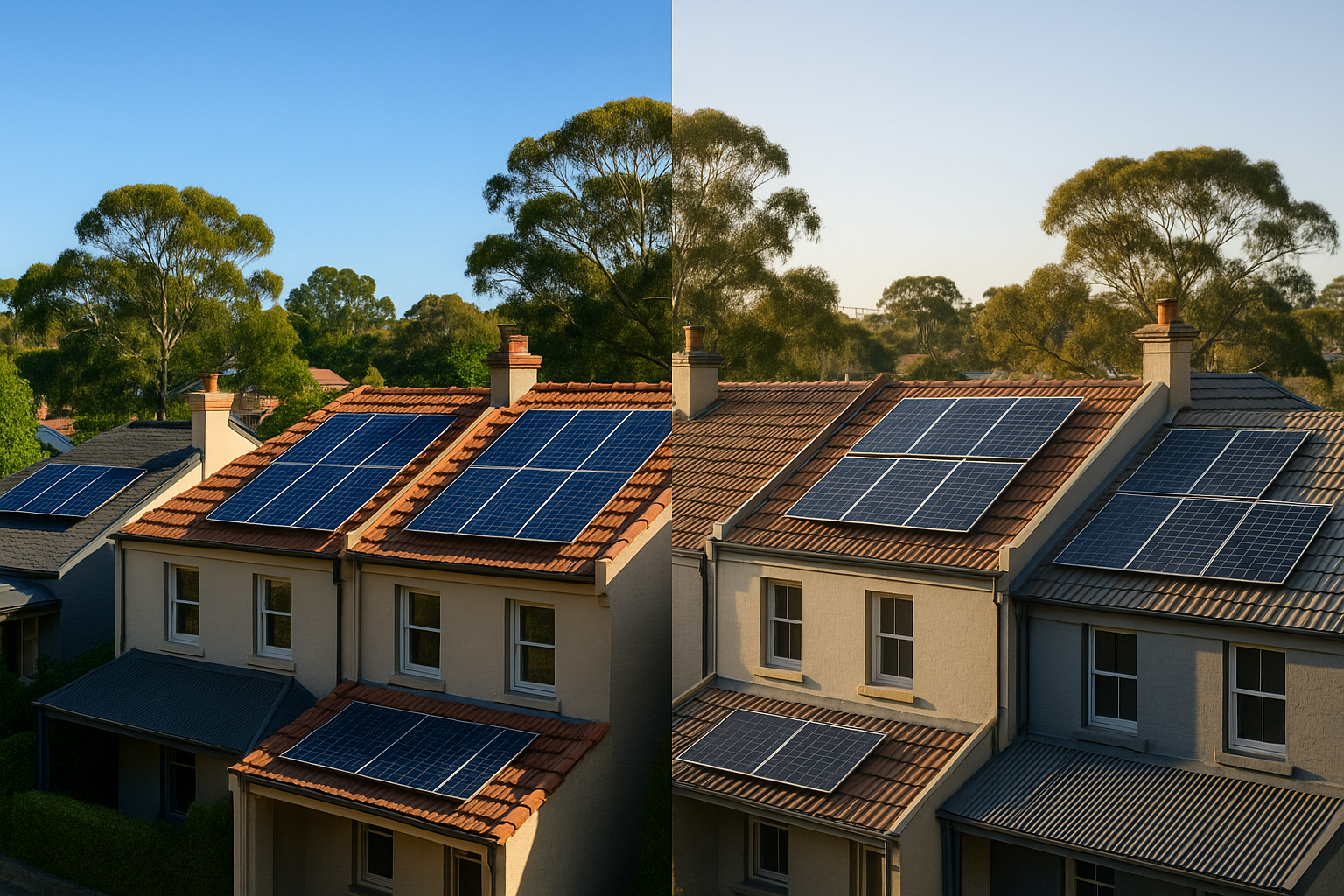
Picture your rooftop solar panels soaking up the bright summer sun, then braving the cool winter chill. They tirelessly generate power through every season, but that doesn’t mean you can just set and forget them. Solar systems love Aussie sunshine, but they’re not entirely hands-free. A bit of seasonal solar maintenance goes a long way toward keeping things safe, efficient and trouble-free all year round. Simple checks in summer and winter can stop minor wear from turning into costly faults. By staying on top of a few seasonal chores, you’ll ensure your investment keeps delivering maximum energy and savings. And if you’d prefer to leave it to the pros, our services cover seasonal tune-ups with full safety and performance inspections.
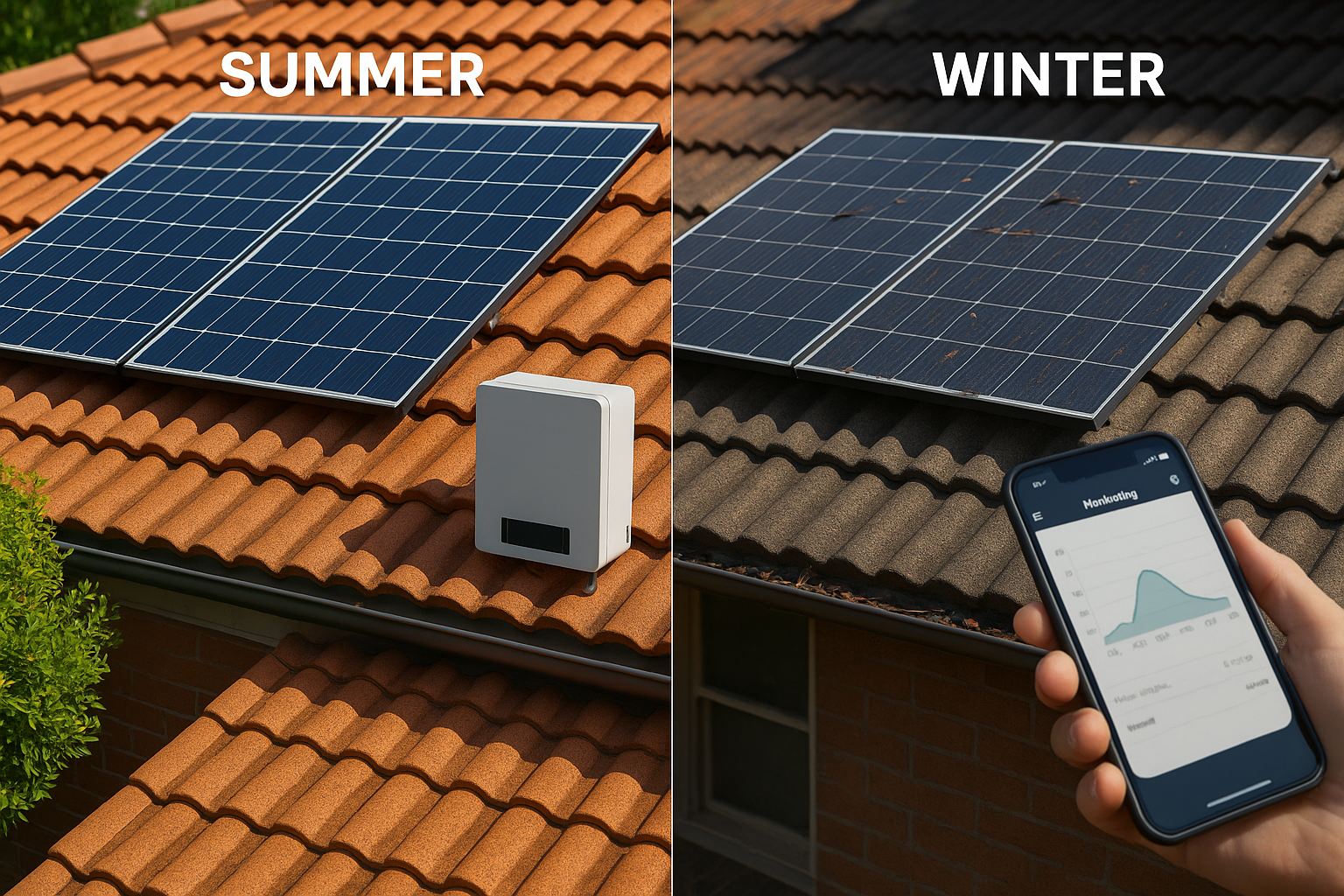
Summer prep steps
Summer heat is when your solar works its hardest. With high temperatures and long sunny days, your panels and inverter are working overtime, and a little prep now will help them handle the load. A quick summer solar checklist before the real scorchers hit can keep everything running smoothly.
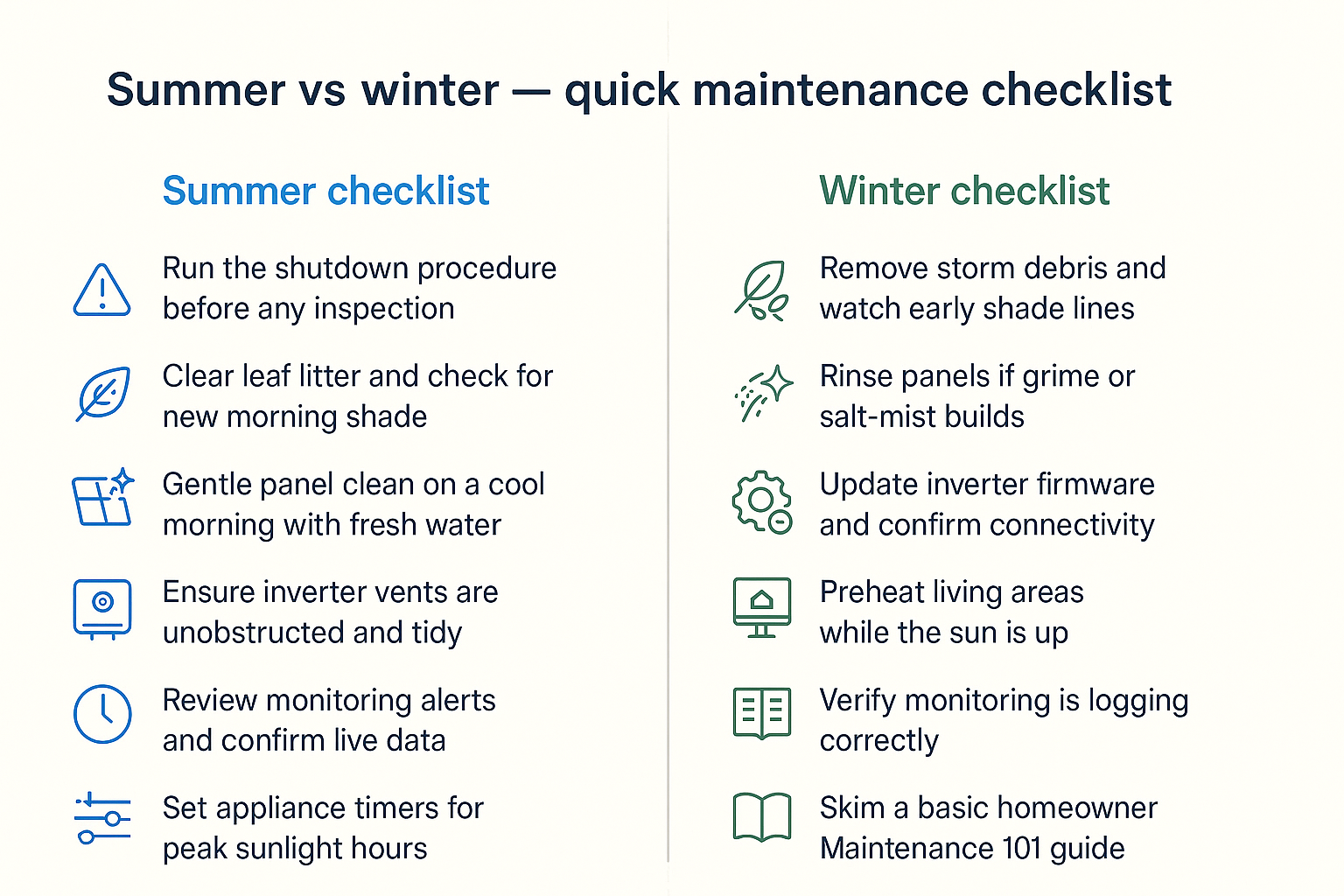
- Safety first: Always run the full shutdown procedure before checking anything, and be mindful of where you step – stay off wet or fragile roof surfaces.
- Clear leaf litter: Debris from trees or nearby buildings can build up around panels and wiring. Clear out any leaves, twigs or gunk so they don’t end up causing issues down the track.
- Check morning shade: Shade that wasn’t there last year can really cut into your energy production. If you spot new shadows creeping over your panels in the morning (from growing trees or new structures), consider trimming back branches or other obstructions to let the sunshine through.
- Gentle panel clean: Give your panels a rinse with clean water and a soft brush on a cool morning (when they’re not hot). And remember – no harsh chemicals or pressure washers, just water will do.
- Check inverter airflow: Clear space around your inverter and any switchgear. Inverters can get pretty warm on hot days, so keep the area tidy and make sure nothing is covering its vents.
- Review your monitoring app: Make sure it’s showing live data with no error alerts. It’s best to catch any issues early so you can address them before peak summer.
- Tweak appliance timing: Run big appliances (like the dishwasher or pool pump) during peak sunlight hours. That way you’re using your solar power as it’s generated, instead of drawing from the grid.
Need help ticking off this list? Our team handles all seasonal services if you’d prefer a pro’s touch. You can also follow the Clean Energy Council home maintenance advice for safe steps every homeowner can take.
Winter prep steps
Winter may bring shorter days and a lower sun angle, but your system still works away — especially with a bit of love. This quick winter solar checklist will help keep you generating through the colder months.
- Check for shade and debris: The sun sits lower in winter, so objects that never cast a shadow in summer might now intrude on your panels. Also clear away any storm debris like fallen leaves or branches so every ray of winter sun counts.
- Panel clean (if needed): Check for grime or salt build-up, especially in coastal areas. If your panels look dirty or salty, give them a gentle rinse with water only — no detergents or high-pressure hoses.
- Update inverter firmware: If your inverter’s app shows a firmware update available, install it. Updates often improve performance or fix bugs, so it’s worth keeping your system software up-to-date.
- Smart heating habits: Preheat living areas during sunlight hours, then insulate to hold the warmth longer. For example, run your heater or reverse-cycle air-con in the afternoon while your panels are producing, then turn it off in the evening and keep the heat in. You’ll stay cosy using free solar energy and rely less on the grid at night.
- Check your monitoring app: Make sure your monitoring is connected and updating correctly. If it’s been offline or showing errors, troubleshoot now so you’re not left in the dark about your system’s performance.
- Brush up with our Maintenance 101: Safe, simple tasks every homeowner can do to stay on top of system care.
If you have a Residential Solar system, even a quick clean and a few habit tweaks can help improve your winter output. Every bit of sunshine helps in the colder months. For more general energy-saving tips, see the Energy.gov.au guidance for households.
Pro check-ups cadence
While seasonal DIY checks help, a yearly visit from a licensed solar technician keeps your system in peak form. Add an extra inspection if you’ve had:
- hailstorms
- heatwaves
- roof repairs or major nearby works
During a professional service, a technician will typically perform:
- Electrical safety testing
- Thermal scan for hidden faults or hot spots
- Mounting hardware check for torque and condition
- Isolator inspection
- Monitoring system audit
- Full health report with recommendations
These are all part of our seasonal services — and we’re just a click away if you’d like to Contact Bright Future Energy.
For added peace of mind, it’s worth checking the Ausgrid information on seasonal safety or AEMO overview of seasonal demand to understand how weather impacts the wider energy grid too.