
Solar + EV Charging: How to Charge from Sunshine First
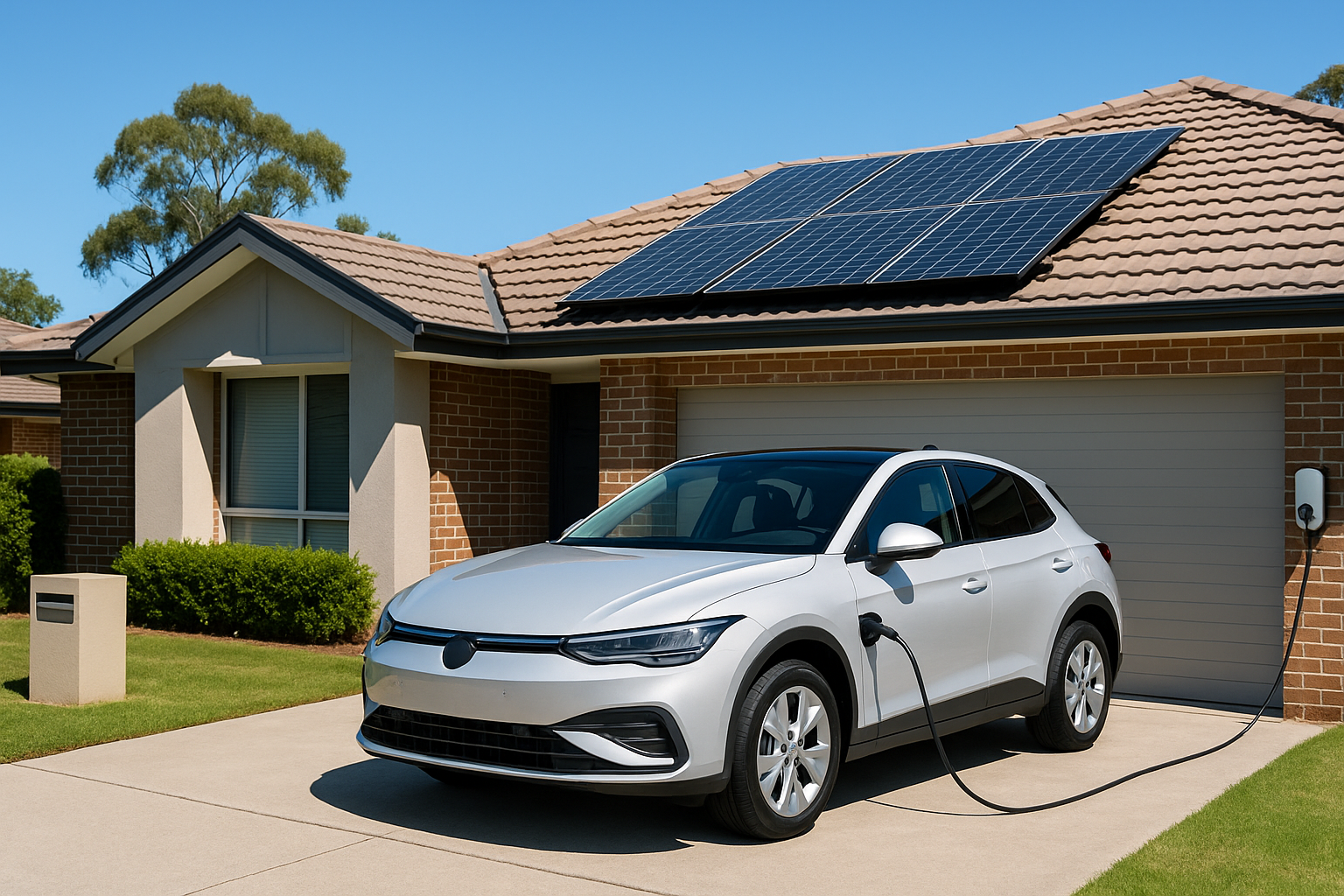
As a Sydney homeowner, you probably want to master solar EV charging Sydney style. The aim is simple: pour sunshine into your car and spend less on the grid. This guide walks you through schedules, surplus-only settings and tariff timing tips that really work in our city.
Smart charging basics with solar
A smart EV charger solar setup makes the most of your solar by knowing exactly how much surplus power you have. It reads signals from a CT clamp on your main feed or a data link from the inverter. With that information it adjusts output so the EV only uses spare solar.
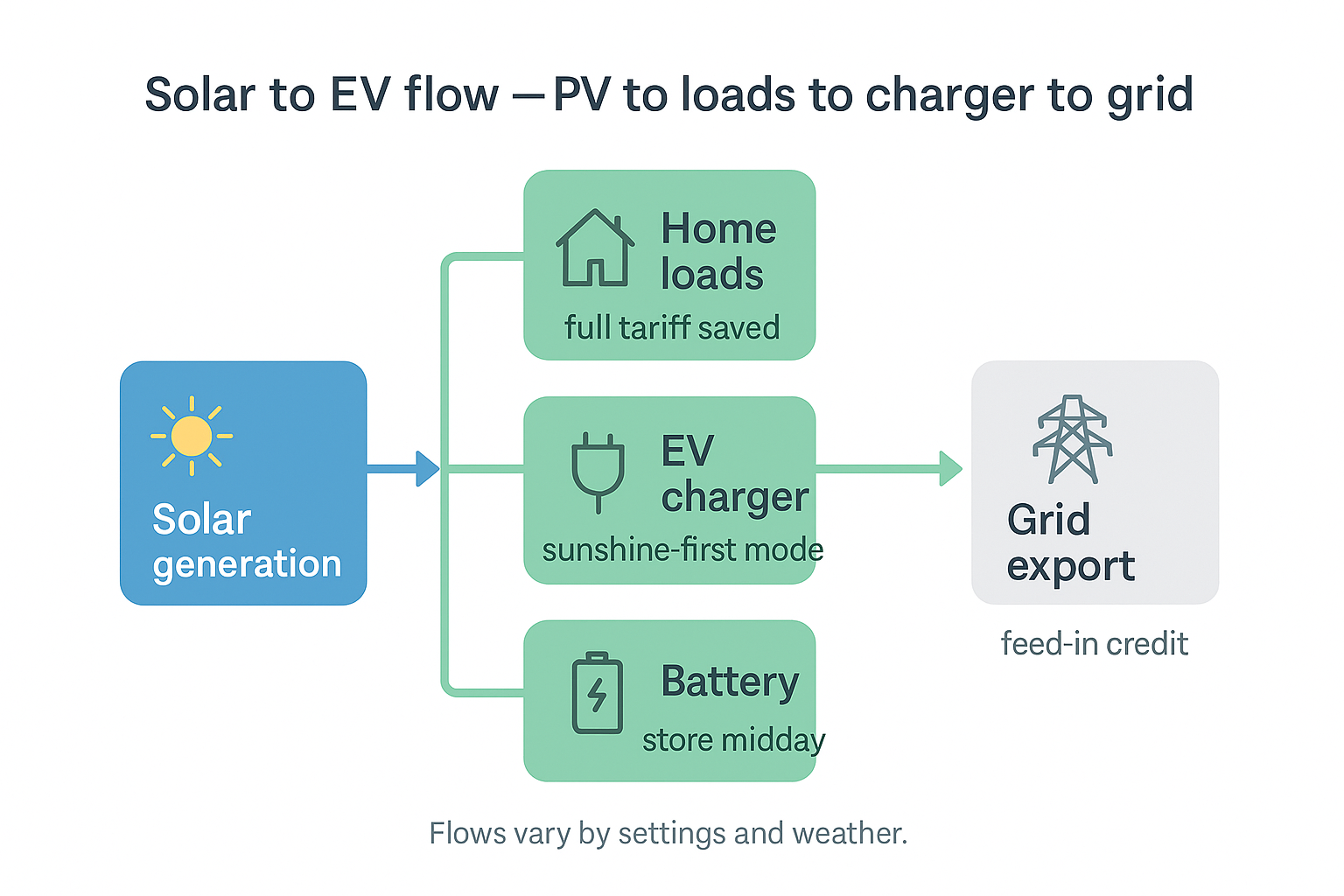
Most smart units offer three main modes that you can switch between. A charge-now option fills your battery quickly and uses the grid whenever needed. A solar-match mode waits until your PV system produces surplus and then trickles energy into the car, so you effectively charge EV with solar only. Scheduled windows let you set a fixed period, such as 10 am to 2 pm. During that time the charger will run even if clouds roll in.
Most solar-charging setups always prioritise household appliances over your car. If your kettle, air conditioner or dishwasher kicks on, the charger will pause or slow until surplus returns. This prevents tripping breakers and keeps the family comfortable while still feeding the EV when conditions improve.
For more tips on equipment options and safety, see the Energy.gov.au EV charging basics.
Midday charging vs night rates
In Sydney a good chunk of your solar production falls between mid morning and early afternoon. Charging during this window often beats even the cheapest night-time rate because you are using your own energy. However there are times when off-peak night rates still make sense. This is often during winter or when your car is at work during the day.
Three EV charging strategies and what they cost
|
Strategy |
When it runs |
Typical source |
Pros |
Watch-outs |
What to do next |
|
Midday solar window |
10 am-2 pm |
Mostly PV |
Highest solar share |
Needs car at home |
Set weekday schedule |
|
Solar-match mode |
Any daytime surplus |
PV first, grid top-up |
Fire-and-forget |
May be slow on cloudy days |
Enable surplus-only in charger or app |
|
Night off-peak |
10 pm-7 am (example) |
Grid |
Predictable cost |
Low solar share |
Combine with a small battery |
Examples only. Your tariff, charger model and inverter determine exact outcomes.
Within the Ausgrid network, peak pricing runs from 3 pm to 9 pm in summer and winter. Off-peak prices apply outside that window and all day in spring and autumn. Set your EV charger to run between 10 am and 2 pm on weekdays. On weekends you might choose 11 am to 3 pm to suit a later start. These windows catch the bulk of your rooftop output while avoiding the afternoon peak. To understand how your tariff changes across the day, check the Ausgrid time-of-use tariffs.
Solar surplus modes and CT clamps
At the heart of any surplus-only system is a small CT clamp. It wraps around your main incoming feed or sometimes the inverter output. This sensor measures current flowing in and out so the charger knows when surplus is available.
Surplus-only mode is simple: the charger waits until the measured export passes a set threshold. In many homes this threshold is around 1.4 kW so the charger can maintain a stable session. If clouds reduce your output and the surplus dips, the charger pauses instead of drawing from the grid. Some chargers also include ramping logic that softens the start-stop cycle to protect the car and household wiring.
Correct clamp orientation is absolutely critical to getting accurate readings. The arrow on the CT should usually face toward the grid connection so the sensor reads export correctly. Mount the clamp away from other cables to reduce interference. When upgrading your system, make sure your charger firmware and inverter data link are up to date. This ensures both devices speak the same language reliably every time.
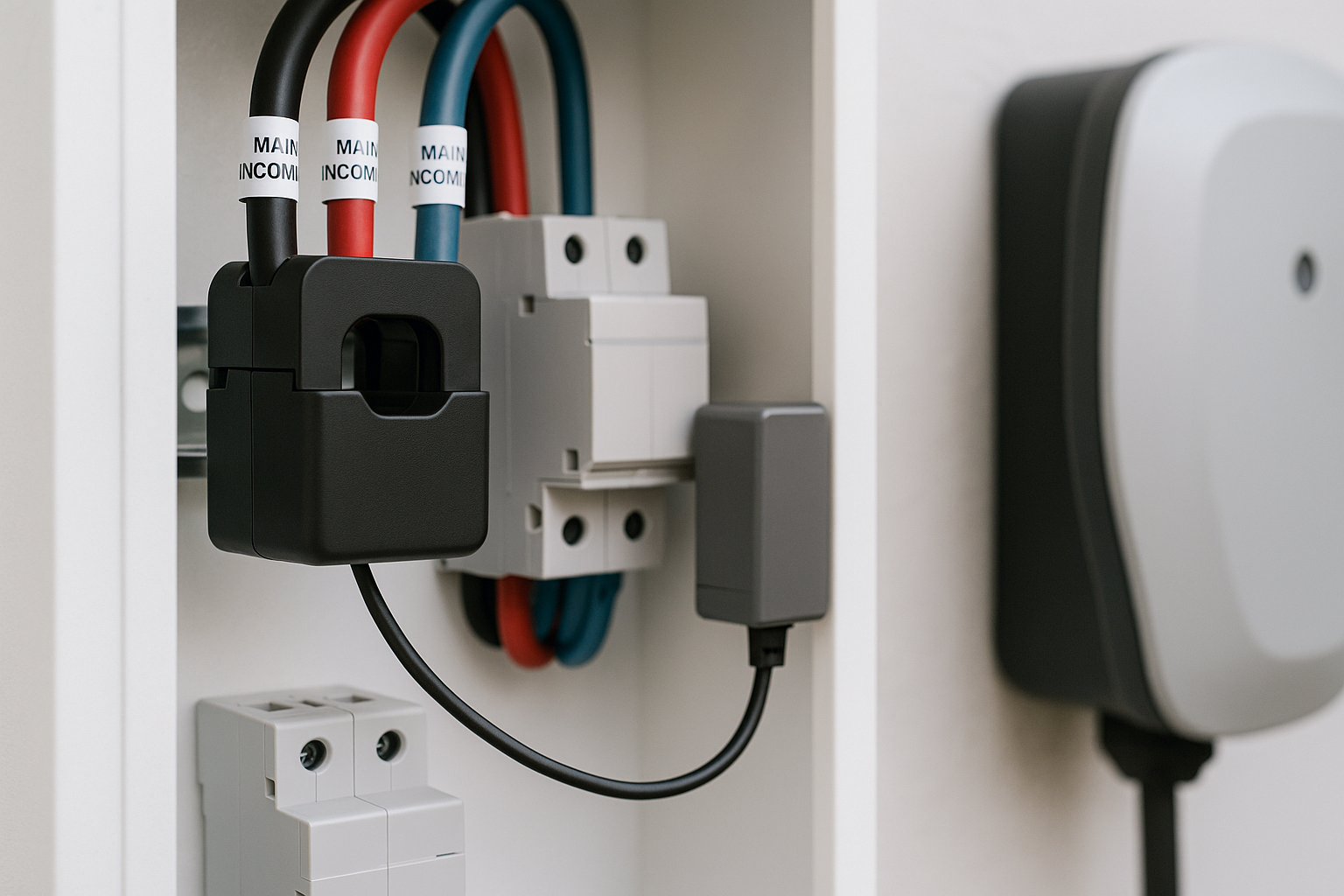
For correct setup you need a compatible charger, firmware and CT clamp orientation. Our technicians can advise on hardware and install neat CT clamps; book through our Services page. For deeper data and case studies, explore the ARENA EV smart charging insights.
When a battery makes EV charging cheaper
Adding a battery changes the EV charging picture again. A 5-10 kWh home battery can store midday solar and pour it into your car during the early evening. That means you can avoid shoulder and peak rates altogether. With a bigger pack you can charge both your car and run appliances after sunset.
If your household demand is high in the evening, you may need to choose between filling the battery or the EV. Use your charger or energy management system to prioritise whichever yields more savings. During mild seasons you might top up the EV first and let the battery finish later; during winter the battery may keep the lights on and heating going.
Still not sure when to switch modes? Test a few combinations over several weeks and review your bills. For personalised help tuning your schedules, reach out via Contact Us. AEMO demand periods provides insights into how wholesale demand affects prices across the National Electricity Market.